Shoe Sole Tensile Strength Testing

1.Test Scope  

Applicable to various types of sole materials, including rubber soles such as natural rubber and synthetic rubber-made sports soles, casual soles, etc.; plastic soles made of materials like polyethylene (PE), polypropylene (PP), polyvinyl chloride (PVC), etc., commonly used in various fashion shoes, sandals, etc.; polyurethane soles, which are widely used in high-end leather shoes and sports shoes due to their excellent wear resistance and elasticity; and composite soles made from multiple materials, such as rubber-polyurethane composites or fabric-rubber composites, whether for adult shoes or children's shoes, During quality inspection of newly produced soles, or during the evaluation of sole performance in shoe product R&D, as well as during market supervision spot checks, it is necessary to test the tensile strength of the soles to ensure they do not easily break during normal wear and use, thereby ensuring the quality and safety of shoe products.


2.What are the test items?

Horizontal tensile strength test of the sole, longitudinal tensile strength test of the sole, comparative tensile strength test of different parts, tensile strength change test of the sole material after aging, tensile strength determination of the sole after wear treatment, tensile strength test of the sole under different temperature conditions, tensile strength assessment of the connection between the sole and the upper, analysis of the effect of additives (such as fibers, fillers, etc.) on tensile strength, Tensile strength testing between multiple layers of the sole structure, study on the relationship between sole tensile strength and sole thickness, repeatability and reproducibility testing of sole tensile strength, tensile strength change testing of the sole under humid conditions, tensile strength testing of the sole after chemical corrosion, and deformation characteristic testing of the sole during the tensile process.


3.Testing Instruments  

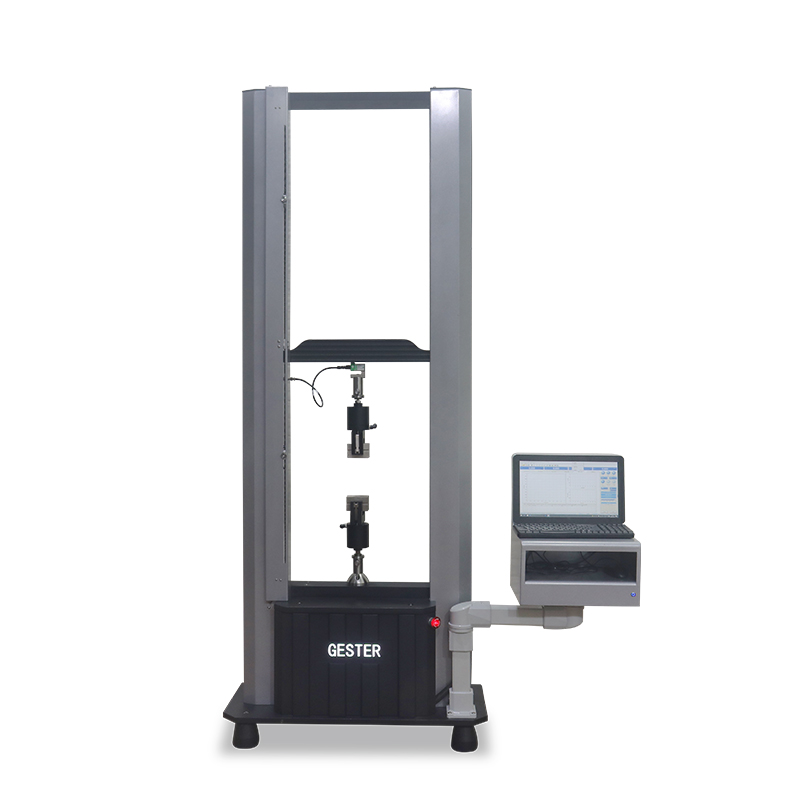
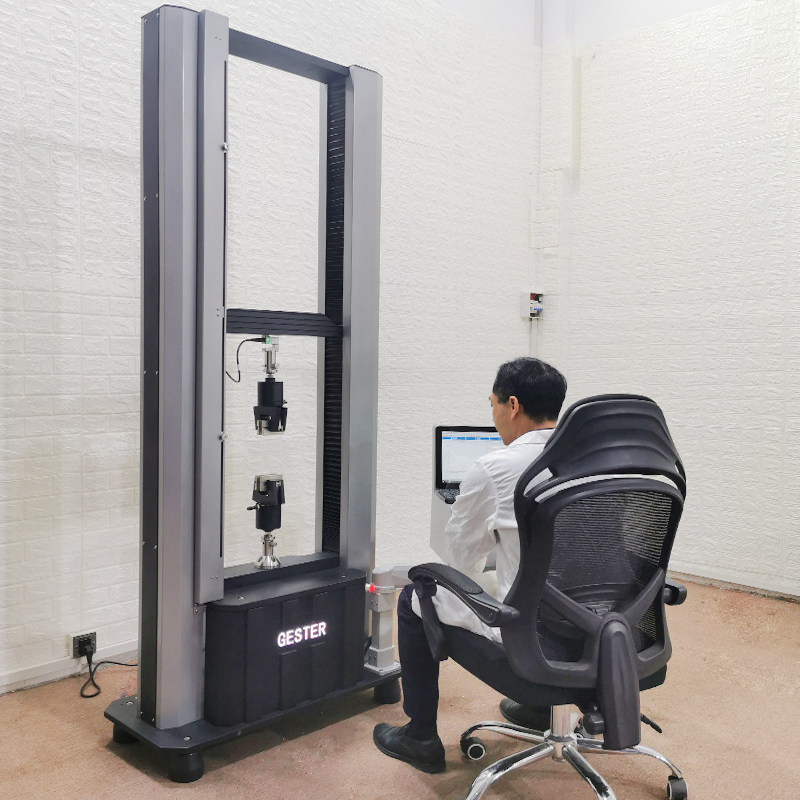
Tensile Testing Machine: Capable of precisely applying tensile force and measuring changes in force values during the stretching process of shoe soles, thereby determining tensile strength values; Constant Temperature and Humidity Test Chamber: Capable of adjusting and maintaining different temperature and humidity environments, used to test the tensile strength of shoe soles under special environmental conditions; Aging Test Chamber: Simulates the aging process of sole materials to assess changes in tensile strength after aging; Abrasion Tester: Subjects soles to simulated abrasion treatment and then measures their tensile strength; Microscope: Observes the microscopic structure of sole materials and their fracture patterns during tensile testing; Vernier caliper, used to measure the thickness and other dimensional parameters of shoe soles, assisting in studying their relationship with tensile strength; Electronic balance, used to weigh shoe sole samples to ensure consistency of test samples; Data acquisition system, used to record real-time force values, displacement, and other data from the tensile testing machine during the testing process, facilitating subsequent analysis.


4.Testing Methods and Standards

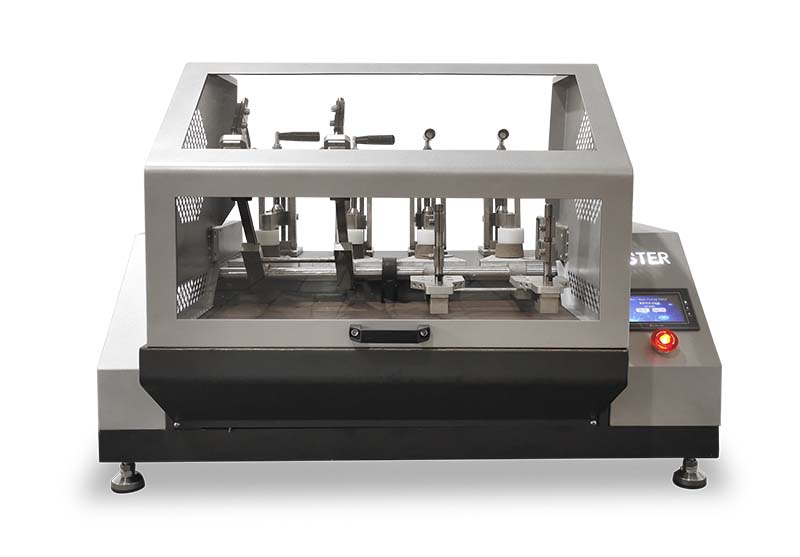
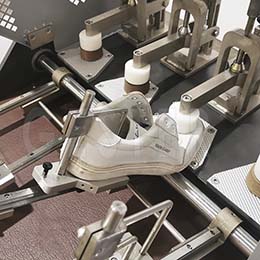
Testing methods typically begin by cutting a suitable-sized sample from the sole of the shoe product. A Vernier caliper is used to measure its thickness and other relevant dimensions, which are then recorded. The sample is secured in the clamps of a tensile testing machine, and parameters such as tensile speed and direction (transverse or longitudinal) are set according to testing requirements. The testing machine is then activated to perform the tensile test, while a data acquisition system records force and displacement data until the sample breaks. The tensile strength is then calculated using a formula. For tests under special conditions, such as aging, wear, or different temperature and humidity conditions, the sole samples must first be treated under the corresponding environmental conditions for a specified period of time before conducting the tensile strength test. The testing standards are based on relevant standards such as “Footwear - Whole Shoe Test Methods - Upper-Sole Adhesion Strength” (GB/T 21396 - 2008), These standards provide detailed specifications for sample preparation, testing environment, instrumentation requirements, testing procedures, criteria for determining the acceptability of test results, and reporting requirements for tensile strength testing of shoe soles. This ensures the accuracy, consistency, and reliability of test results, ensuring that the tensile strength of shoe soles meets the quality requirements for footwear products and providing consumers with reliable footwear products.

Email: hello@utstesters.com

Direct: + 86 152 6060 5085

Tel: +86-596-7686689

Web: www.utstesters.com

Test methods for fabric pilling

1. Circular Track Fabric Pilling Test

According to the specified method and test parameters, use a nylon brush and abrasive, or abrasive alone, to cause the fabric to rub and pill. The fabric is then compared to a sample photo under specified lighting conditions to assess the pilling grade.


Testing equipment: Circular Track Pilling Tester, abrasive, foam plastic spacer, sample cutting tool, standard sample photo (5-grade scale), and rating box.


During measurement, the friction body can evenly abrade the fabric surface in multiple directions, following either a straight or elliptical trajectory. Therefore, the resulting pilling is similar to the pilling that occurs when the fabric is actually worn (e.g., on sleeves, elbows, knees, etc.). This method is applicable to all types of textile fabrics.


2. Martindale Fabric Pilling Test

A sample mounted on the abrasive head is rubbed against the fabric abrasive on the abrasive table a specified number of times under a specified pressure. The pilling grade is assessed by comparing the sample to a photograph under specified lighting conditions.

Testing equipment: Martindale abrasion tester, woven felt, sample spacer, punch, standard photograph, and rating box.

This method is suitable for most fabrics, but is particularly effective for wool fabrics.


3. Pilling Box Method Fabric Pilling Test


According to the specified method and test parameters, a fabric sample is placed on a polyurethane plastic tube and rolled in a rotating square wooden box lined with plastic cork. The pilling grade is assessed by comparing the sample with a photograph under specified lighting conditions.


Testing equipment: a pilling box tester, polyurethane plastic tube, sample punch, sewing machine, tape, standard sample, and rating box.


The pilling produced by this test method is similar to the pilling effect experienced during actual clothing, but the test time is longer.


This method is suitable for most fabrics, but is particularly suitable for wool knitted fabrics.


4. Sample Pilling Grade Example


Email: hello@utstesters.com

Direct: + 86 152 6060 5085

Tel: +86-596-7686689

Web: www.utstesters.com


What are the standards for testing the color fastness of textiles?

Does your clothing fade after washing? Does it turn yellow after prolonged exposure to sunlight? Does it stain when wet with sweat? These are all issues related to the color fastness of textiles, which are closely linked to the raw materials, production, and processing of textiles and clothing. They are also one of the items with a high failure rate in quality inspections. Therefore, testing the color fastness of textiles is a routine testing item in many standards.


1. What is colorfastness of textiles?

Textiles are subjected to various external influences during use, such as compression, friction, and washing. Some dyed textiles also undergo special finishing processes, such as resin finishing, flame-retardant finishing, sandwashing, and brushing. In such cases, it is essential that the colorfastness of dyed textiles remains relatively stable. This is referred to as colorfastness, and testing for colorfastness is an important method for assessing the degree of color fading.


2.What are the standards for textile colorfastness testing?


Colorfastness to washing: DIN EN ISO 105-C06, AATCC 61

Colorfastness to water: DIN EN ISO 105-E01, AATCC 107

Colorfastness to perspiration: DIN EN ISO 105-E04, AATCC 15

Resistance to artificial saliva and sweat: DIN 53160-1/-2

Resistance to friction: DIN EN ISO 105-X12, AATCC 8

Resistance to sublimation: DIN EN ISO 105-P01, AATCC 117

Lightfastness (sunlight): DIN EN ISO 105-B02, AATCC 16

Chlorine (pool) water fastness: DIN EN ISO 105-E03, AATCC 162

Saltwater fastness: DIN EN ISO 105-E02, AATCC 106

Dry cleaning colorfastness: DIN EN ISO 105-D01, AATCC 132

Heat pressing colorfastness: DIN EN ISO 105-X11, AATCC 133

Organic solvent colorfastness: DIN EN ISO 105-X05

Chlorine bleaching colorfastness: DIN EN ISO 105-N01, AATCC 188

Resistance to peroxide bleaching: DIN EN ISO 105-N02, AATCC 172

Resistance to water stains: DIN EN ISO 105-E07, AATCC 104

Resistance to alkali spots: DIN EN ISO 105-E06, AATCC 6


What is the significance of textile colorfastness testing?

The quality of colorfastness directly impacts human health and safety. If, during wear and use, dyes in textiles break down and fade due to the action of enzymes in sweat or saliva, this not only contaminates other garments or items but also allows dye molecules and heavy metal ions to be absorbed by the skin, thereby posing a risk to human health. Therefore, textile colorfastness testing is of great significance in evaluating the quality, usability, and health impact of textiles.


UTSTESTER — Textile Testing, Certification, and Research

UTSTESTER was established in 2005 as an exporter of laboratory testing instruments. All testing instruments comply with international testing standards, including ISO, AATCC, EN, DIN, JIS, ASTM, SATRA, GB, QB, BS, etc. The company has successfully obtained calibration certificates such as ISO 17025 and CE. To ensure continuous quality, UTS operations have been certified to the ISO 9001 standard.


Email: hello@utstesters.com

Direct: + 86 152 6060 5085

Tel: +86-596-7686689

Web: www.utstesters.com

What is colorfastness to perspiration? How is it tested?

Colorfastness to perspiration measures a textile fabric's ability to maintain color stability without fading or bleeding when exposed to human sweat. It is a critical parameter in textile quality testing. Human sweat is a complex mixture containing water, salts (such as sodium chloride), lactic acid, urea, and other components. These elements may chemically react with dyes in the fabric or cause dye migration under the influence of sweat's moisture and temperature, thereby affecting the fabric's appearance and lifespan. This indicator directly impacts the wear experience and durability of garments, being particularly critical for intimate apparel (such as underwear and sportswear) and infant/toddler clothing.


1. Purpose of Sweat Resistance Testing

Sweat resistance testing methods evaluate a material's color durability when exposed to prolonged contact with human perspiration. This is critical for products in close contact with the body, such as apparel, footwear, and accessories. The test simulates the effects of sweat on materials over time, enabling manufacturers to assess colorfastness under real-world usage conditions.


2. Operating Procedure for Sweat Color Fastness Tester

The GT-D09 Sweat Color Fastness Tester is suitable for assessing the sweat color fastness of various textile materials, dyed fabrics, and colored textiles. It evaluates resistance to sweat, water, seawater, saliva, chlorine bleach, and phenolsulfonated ethylamine.

Sweat fastness testing follows various international standards, such as ISO 105-E04, AATCC 15, and JIS L 0848. The test involves immersing textile or leather samples in a synthetic sweat solution containing specific concentrations of salts and acids to mimic human sweat composition.

The samples are then placed in an oven at a set temperature and humidity for a specified duration (typically 4-24 hours). After the sweat exposure period, samples are rinsed and dried, then evaluated for color change or staining using a gray scale or colorimeter. This test assesses color transfer from the material to other surfaces, as well as fading or discoloration of the material itself.

Sweat colorfastness test results are reported on a scale of 1-5 or 1-8, with higher numbers indicating greater resistance to sweat staining. This test is commonly used in the textile and leather industries to ensure products maintain their appearance and quality during use.


3. Significance of Sweat Testing in Textile Testing Methods

Sweat testing within textile testing methods holds significant importance in the textile and leather industries, as it provides manufacturers and consumers with valuable information regarding material quality and performance under real-world usage conditions. High levels of sweat colorfastness indicate that materials are less likely to fade or stain when exposed to perspiration, making them more durable and long-lasting.

Sweat fastness testing methods are standardized to ensure consistency and accuracy across different laboratories and testing facilities. This enables manufacturers to ensure their products meet industry standards and comply with regulations. Furthermore, this testing method can be used to identify potential quality issues in materials before incorporating them into finished goods, allowing manufacturers to address and correct any problems before they reach consumers.


4. Features of Sweat Fastness Testing Equipment

4.1. Steel frame and weight bags are constructed from 316L stainless steel, offering acid and alkali resistance with long-term corrosion resistance.

4.2. The sweat fastness tester provides ISO and AATCC acrylic separator plates.

4.3. The perspiration tester supplies ISO and AATCC standard pressing weights.

4.4. Perspiration testing requires the use of a high-precision drying oven.


5. Other Colorfastness Tests

Sweat resistance testing instruments represent only one of several methods used to evaluate the colorfastness of textiles and leather goods. Additional tests, such as wash fastness, lightfastness, and rub fastness, can be conducted to gain a more comprehensive understanding of a material's color durability.

Wash fastness testing involves subjecting materials to repeated washing cycles to assess resistance to fading or staining. Lightfastness testing exposes materials to artificial or natural light to evaluate resistance to fading. Rub fastness testing involves rubbing one material against another surface to assess resistance to color transfer.


6. Conclusion

In summary, the perspiration colorfastness test method is a crucial assessment technique used in the textile and leather industries to evaluate a material's resistance to fading or staining when exposed to human perspiration. This standardized test ensures consistency and accuracy, providing manufacturers and consumers with valuable information about a material's quality and performance under realistic conditions. Manufacturers can thereby ensure their products meet and comply with industry standards.

Sweat Color Fastness Tester

Email: hello@utstesters.com

Direct: + 86 152 6060 5085

Tel: +86-596-7686689

Web: www.utstesters.com

What is yarn evenness testing? How is yarn evenness testing performed?

1. What is yarn evenness testing?

Yarn evenness testing, in simple terms, is the measurement of the uniformity of yarn thickness along its length. As the basic raw material for textile products, the quality of yarn directly impacts the performance and appearance of subsequent textile products. Yarn evenness, as one of the key indicators of yarn quality, directly affects the quality of textile products.


2. The significance of yarn evenness testing

Conducting yarn evenness testing serves multiple important purposes. On one hand, it helps assess the quality level of yarn. Yarn with even thickness ensures clear fabric patterns, uniform color, and reduced defects during subsequent processing. For example, in weaving processes, uneven yarn may cause defects such as horizontal bands or clouding in the fabric, severely affecting its aesthetic appeal and practicality. On the other hand, testing can promptly identify issues in the spinning process, helping manufacturers adjust process parameters, optimize production workflows, improve production efficiency, and reduce production costs. For instance, if test results indicate that uneven yarn evenness is caused by a malfunction in the draw-off mechanism of the ring spinning machine, the company can target repairs or adjustments to the draw-off mechanism to improve yarn quality.


3. Yarn Evenness Testing Methods

In practice, there are several methods available for testing yarn evenness.

Among these, the traditional visual inspection method involves experienced inspectors directly observing the appearance of the yarn with the naked eye to assess its evenness. While this method is simple and straightforward, it is highly subjective, as different inspectors may have varying criteria for judgment, and it may be difficult to accurately detect subtle unevenness in the yarn.

The capacitive yarn evenness tester method utilizes the difference in dielectric constants between yarn and air. As yarn passes through capacitive plates, the capacitance value changes with yarn thickness. By detecting changes in capacitance, the method reflects yarn evenness. This method offers fast testing speed and high precision, accurately measuring unevenness in short yarn segments.

Another method is the photoelectric yarn evenness tester, which is based on the varying degrees of light obstruction by the yarn. It converts light signals into electrical signals through photoelectric conversion and then analyzes the yarn's evenness. This method is sensitive to changes in the yarn's surface morphology and can effectively detect defects such as yarn fuzz and details.


4. Yarn Evenness Testing Criteria  

In yarn evenness testing, there are a series of important criteria used to quantify the test results. The Average Deviation Coefficient (U%) is one of the commonly used criteria, reflecting the degree of deviation between the actual linear density of each segment of the yarn and the average linear density. The smaller the U% value, the more uniform the yarn evenness. The coefficient of variation (CV%) is also used to measure yarn unevenness, similar to the average deviation coefficient, but with a slightly different calculation method. A lower CV% value indicates better yarn quality. Additionally, there is the blackboard yarn evenness test, which involves winding the yarn around a blackboard and comparing it to a standard sample to evaluate the yarn's evenness grade, categorized into superior, first-class, second-class, etc. A higher grade indicates better yarn evenness.


In the entire textile industry, yarn evenness testing plays a crucial role. From spinning mills to weaving mills, and then to garment processing factories, each stage has strict requirements for yarn evenness. For spinning mills, good yarn evenness test results indicate that the yarn they produce is of high quality, capable of meeting the needs of downstream enterprises, thereby enhancing the company's market competitiveness. Weaving mills use yarn with uniform evenness to produce stable-quality, aesthetically pleasing fabrics, reducing defect rates and improving economic efficiency. Garment processing plants utilize high-quality yarn fabrics to create comfortable, stylish clothing products that appeal to consumers. In summary, yarn evenness testing runs throughout the entire textile supply chain, serving as a critical component in ensuring textile quality and promoting the healthy development of the textile industry.

Email: hello@utstesters.com

Direct: + 86 152 6060 5085

Tel: +86-596-7686689

Web: www.utstesters.com


Why Is Dyeing and Finishing Testing Crucial in Textile Production

The most commonly tested properties include wash resistance, light resistance, abrasion resistance, sweat resistance, ironing resistance, and climate resistance. In practice, the specific testing items are determined based on the product's intended use and product standards. For example, knitted underwear is tested for sweat resistance, while outdoor textiles (such as sunshades, billboard fabrics, and canopy materials) are tested for climate resistance.


1.Sunlight Fastness

Textiles are typically exposed to light during use, and light energy can degrade dyes, leading to the well-known phenomenon of “fading,” causing colored textiles to change color—generally becoming lighter or darker—and in some cases, altering their color tone. Therefore, it is necessary to test for colorfastness. Sunlight fastness testing involves exposing test samples alongside blue wool standard fabrics of different fastness grades under specified conditions to sunlight. The test samples are then compared with the blue wool fabrics to evaluate their sunlight fastness. The higher the grade of the blue wool standard fabric, the more light-resistant it is.


2.Wash fastness

The sample is sewn together with a standard backing fabric, washed, rinsed, and dried under appropriate temperature, alkalinity, bleaching, and friction conditions to obtain test results in a short period of time. The friction is achieved through rolling and impact of stainless steel balls in a small bath ratio, and the results are rated using a gray card. Different testing methods have different temperature, alkalinity, bleaching, and friction conditions, as well as sample sizes. Specific selections should be made based on testing standards and customer requirements.


3. Rubbing color fastness

Place the sample on a rubbing fastness tester and rub it with a standard rubbing cloth under a certain pressure for a specified number of times. Each group of samples must undergo both dry and wet rubbing color fastness tests. The color transferred onto the standard rubbing cloth is graded using a gray scale, and the resulting grade represents the measured rubbing color fastness. Friction colorfastness requires both dry and wet friction tests, and all colors on the sample must be subjected to friction.


4. Dry cleaning color fastness

Similar to water washing color fastness, except that water washing is replaced with dry cleaning.


5. Sweat stain color fastness

Sew the sample to the standard backing fabric, treat it in sweat stain solution, clamp it in a sweat stain color fastness tester, place it in an oven at a constant temperature, then dry it, and rate it using a gray card to obtain the test results. Different test methods have different sweat solution ratios, different sample sizes, and different test temperatures and durations.


6. Non-chlorine bleach colorfastness

The fabric is washed under non-chlorine bleach washing conditions, and the degree of color change is evaluated, which is the non-chlorine bleach colorfastness.


7. Pressing color fastness

Cover the dry sample with a cotton backing fabric, then press it for a certain period of time in a heating device at a specified temperature and pressure. Evaluate the discoloration of the sample and the color transfer to the backing fabric using a gray sample card. There are three types of heat pressing color fastness: dry pressing, damp pressing, and wet pressing. The specific test method should be selected based on different customer requirements and test standards.

Email: hello@utstesters.com

Direct: + 86 152 6060 5085

Tel: +86-596-7686689

Web: www.utstesters.com

FK008 Full-Servo Valve Pocket Bag Making Machine - A New Benchmark for Efficient and Intelligent Packaging

In today's increasingly competitive global packaging industry, companies are increasingly demanding efficient, precise, environmentally friendly, and intelligent production equipment. As a professional valve bag making equipment manufacturer, our FK008 valve bag making machine, with its leading automation technology, stable and reliable performance, and future-oriented intelligent features, has become an ideal choice for customers in the building materials, chemical, grain, and plastic weaving industries.


Pioneering a New Era in Valve Bag Making Equipment: Discover the Benchmark Technology of the FK008-III Valve Bag Making Machine

We are proud to introduce the advanced FK008 valve bag making machine, whose features and performance meet industry-leading standards, providing customers with a more stable, efficient, and intelligent packaging production experience.

1. Fully Servo Driven, the Perfect Combination of Speed and Precision

The Gachn Gourp FK00-III valve bag making machine utilizes a fully servo control system, offering greater flexibility and precision than traditional mechanical drives. It can achieve a stable bag-making speed of up to 120 bags per minute while maintaining a tolerance of ±0.5mm. Whether it's large-volume orders or demanding customized packaging, it can easily handle them.

2. World-Leading Web Guide and Unwinding System

The machine is equipped with an imported web guide to ensure the bag's center position remains stable during high-speed operation, with deviations controlled within ±1mm. Passive unwinding combined with magnetic powder braking ensures a stable material supply, reducing waste and downtime.

3. Patented Bag Opening Mechanism for Stable and Efficient Operation

The FK008 features a patented bag-opening technology. Unlike other bag-making machines, the Gachn Gourp FK008 utilizes a negative pressure blower and servo lever to ensure a smooth opening of the bag, avoiding common bag breakage or uneven openings. This innovative design combines high efficiency with low maintenance, significantly improving production continuity.

4. Optimized Heat Sealing and Forming Processes

Using constant temperature control and hot air welding technology, the temperature is stable and reliable, ensuring beautiful and strong welds. The triangular forming device and adjustable folding mechanism ensure smoother bag opening formation and adaptability to different bag shapes.

5. Intelligent Monitoring and Remote Diagnosis

The equipment features a built-in data monitoring system and optional cloud-based remote diagnostics. Users can not only monitor production status in real time, but also perform remote troubleshooting and maintenance, greatly improving equipment management efficiency and reducing the risk of downtime.

6. High-Precision Visual Inspection System

The FK008 can be equipped with an optional 4K industrial camera for visual inspection, enabling real-time monitoring of bag surface and bag opening quality. Its rejection accuracy exceeds 96.5%, with a false rejection rate below 0.15%, ensuring that every valve bag leaving the factory meets high quality standards. 7. User-Friendly Design for Easier Operation

A fully graphical user interface allows for intuitive parameter adjustment and is equipped with a safety protection system and fault alarm system. If any safety door is opened, the machine will immediately shut down, ensuring operator safety.


FK008 Valve Bag Making Machine: Beyond Innovation

Learning from the Gachn Group's extensive experience in packaging technology, our FK008 valve bag making machine is a cost-effective and practical professional solution for customers seeking high returns and consistent quality.

AI visual inspection for valve bag making machines

Core Feature 1: Comprehensive Performance Comparable to Benchmark Systems

Equipped with a high-precision visual inspection system (4K industrial camera), it achieves a rejection accuracy of at least 96.5% and a false rejection rate below 0.15%, essentially matching the automatic screening function of the qualiSTAR II.

Feature 2: Comprehensive Automation and User-Friendly Design

A fully servo-driven system enables quick and flexible format changes and adjustments.

A passive unwind combined with an inboard web guide maintains stable feed rates with an error of less than ±1 mm. A comprehensive safety system ensures safe operation and reliable processes.

Feature 3: Modularity and Easy Maintenance

The microperforation, bag opening, folding, and welding mechanisms utilize adjustable, modular, or servo-controlled structures, simplifying replacement and maintenance.

An early warning system and floating tension control ensure continuous production and minimize downtime.

Feature 4: Independently Developed and Patented, Legal and Compliant for Greater Peace of Mind

Unlike some copycat equipment, the FK008 valve bag making machine boasts a completely independently developed patented design encompassing key aspects such as the bag opening mechanism, forming process, and control system.

Legal and Compliant: Avoids the risk of patent infringement, ensuring customer investment security.

Technological Innovation: Provides unique solutions to the pain points of valve bag production.

Long-Term Guarantee: Customers can confidently export to global markets without being restricted by intellectual property barriers.

Drawing on industry-leading converting line technology, Gachn Group's FK008 valve bag making machine truly combines professionalism and reliability with high cost-effectiveness and practicality. Whether you prioritize stable production, high output, or seek intelligent automation and easy maintenance, the FK008 will meet and exceed your expectations. We look forward to helping you reach new heights in intelligent packaging and lead the market. If you would like further technical support or English promotional materials, I'm always here to assist you!

Why Choose a Gachn Six-Shuttle Circular Loom? Five Key Advantages


In the plastic weaving machinery industry, circular looms are core equipment for producing various products, including tubular fabrics, woven bags, geotextiles, and filter screens. Among numerous brands and models, the GC-FYB850-6 six-shuttle circular loom launched by Jiachuang Group has become the preferred choice for many companies due to its superior performance and intelligent design. Combining its technical features with market feedback, I will explain five key reasons for choosing a Jiachuang six-shuttle circular loom.


1. Efficient Production and Increased Productivity

Gachn Group circular looms utilize a six-shuttle design, achieving a maximum speed of 160 rpm and a shuttle picking frequency of up to 960 times per minute, significantly exceeding traditional four-shuttle models. This results in higher weaving density and faster speeds per unit time, making it particularly suitable for high-volume, high-demand woven bag production, significantly improving overall production efficiency. (Circular loom speed video)


II. Intelligent Control, Easy Operation

Gachn Group circular looms are equipped with a Delta PLC control system and human-machine interface (HMI), enabling synchronized control of the entire machine, automatic fault alarms, and one-touch parameter setting. Operators can easily monitor operating status and adjust process parameters via the touchscreen, significantly reducing manual intervention and operational errors.


III. Energy-Saving and Environmentally Friendly, Easy Maintenance

New flat cam structure: Smooth operation, low energy consumption, and low noise.

Oil-free shuttle lubrication: Prevents oil contamination of the fabric, making it particularly suitable for high-standard industries such as food packaging and environmentally friendly materials.

Servo motor drive: Lifting, warp let-off, and cloth winding are all controlled by servo motors, ensuring precise and energy-efficient operation.


IV. Excellent Fabric Quality and Wide Applicability

Gachn Group circular looms are equipped with a high-precision automatic warp tension control system, ensuring uniform tension on each warp yarn, resulting in high-quality, smooth, and uniformly dense tubular fabrics. They support a fabric fold diameter range of 300–850 mm, flexibly meeting the production needs of diverse product specifications.


Ⅴ. Stability and Reliability, Brand Guarantee

Jia Chuang Group has many years of technical experience and a strong market reputation in the field of weaving machinery. This machine utilizes key electrical components (such as the Delta PLC, servo system, and Omron relays) from renowned domestic and international brands, ensuring long-term stable operation, minimal failure rates, and a long service life.


Conclusion

The Gachn Group six-shuttle circular loom not only boasts high-efficiency and high-precision production technology, but also excels in intelligent, energy-saving, and environmentally friendly design. It is an ideal upgrade option for modern woven bag manufacturers. If you're looking for a reliable, efficient, and easy-to-operate circular loom, the Gachn Group six-shuttle circular loom is undoubtedly worthy of your trust.

For more technical specifications or customized solutions, please contact us for detailed information.

How to Ensure Long-Term Stable Operation of High-Low Temperature Stepper Motors?

High-low temperature stepper motors are designed to operate under extreme temperature conditions and are widely used in aerospace, medical equipment, precision instruments, and other fields. To ensure their long-term stable operation, the following aspects require attention in terms of maintenance and management:

Select the Appropriate Motor Type

When choosing a high-low temperature stepper motor, select one that suits the temperature range of the actual application environment. For example, some motors can withstand environmental temperatures ranging from -20°C to 200°C, while others can operate normally in environments from -196°C to 200°C. Choosing the right motor can reduce failures caused by temperature incompatibility.

Check Connections and Heat Dissipation

Ensure that the connections between the motor and the driver are secure and reliable, and check for loose wiring terminals. At the same time, ensure there is no accumulated dust or other obstructions around the motor to guarantee effective heat dissipation. If necessary, install fans or heat sinks to lower the motor's temperature.

Regular Maintenance and Inspection

Regularly clean and lubricate the motor to reduce friction and wear. Use metal cleaning agents to gently wipe away dust and dirt from the motor's surface, and ensure that bearings and transmission components are properly lubricated.

Prevent Overloading

Avoid subjecting the motor to loads exceeding its rated capacity. Overloading can cause the motor to overheat and become damaged. Ensure that the load remains within a reasonable range during operation and adhere to the rated load parameters provided by the manufacturer.

Calibration and Testing

Perform regular calibration and testing of the motor to ensure its precise and stable operation. Calibration may include position and speed calibration for the stepper motor.

Regularly Check for Wear and Damage

Periodically inspect all parts of the motor, including bearings, transmission belts, couplings, etc., to ensure they are intact and functioning properly. Replace worn or damaged parts in a timely manner to prevent further damage.

Choose the Appropriate Protection Rating

Select a suitable protection rating based on the severity of the application environment. For example, some motors can be customized with special protection ratings to adapt to harsh environments.

Use Special Materials and Designs

Choose motors made with special materials and designs, such as high-temperature or low-temperature resistant materials, as well as specially designed insulation and adhesives. These features help ensure stable motor operation under extreme temperatures.

Professional Technical Support

In case of any abnormalities, promptly contact professional technical personnel for assistance. Professional technical support can provide targeted solutions to ensure the long-term stable operation of the motor.

By implementing the above measures, the long-term stable operation of high-low temperature stepper motors in various environments can be effectively ensured, thereby guaranteeing the reliability and efficiency of related equipment and systems.

Enhance Steering Precision & Durability with FENGYU Idler Arms for Trucks and SUVs

When it comes to maintaining optimal steering control and suspension integrity in trucks and SUVs, the idler arm plays a critical role. As a complement to our renowned stabilizer links, FENGYU is proud to offer a comprehensive range of high-quality idler arms engineered to meet the demands of diverse vehicle models—from daily commuters to heavy-duty workhorses.

With over 30 years of expertise in automotive suspension manufacturing, FENGYU provides idler arms designed for precision fit and extended service life. Our product lineup includes:


  • Ford Idler Arm, Ford F-150 Steering Idler Arm

  • Toyota Idler Arm, Honda Idler Arm

  • Chevrolet Idler Arm, Buick Enclave Idler Arm

  • Nissan Titan Steering Idler Arm, Mazda BT-50 Front Idler Arm

  • BMW Idler Arm

  • Custom Idler Arms for Popular Trucks & SUVs

  • And more car models available

Whether you're servicing a rugged Ford F-150, a dependable Chevrolet Silverado, or a sophisticated European model, FENGYU delivers components that restore like-new steering responsiveness and safety.

factory-direct Idler Arm supplier

Built Strong to Last Longer: Superior Materials & Design

At FENGYU, every idler arm is manufactured with durability in mind. We use high-strength forged steel and ductile iron castings to ensure structural integrity under extreme stress and load. Critical pivot points are machined to tight tolerances for smooth articulation, while corrosion-resistant coatings protect against rust and wear.

Our idler arms also feature advanced bronze or polymer bushings designed to absorb shocks and reduce vibration. This translates to quieter operation, improved road feedback, and longer component life—key advantages for both off-road adventures and urban driving.


Customization Options: OEM/ODM Services Available

We understand that one size does not fit all. That’s why FENGYU offers extensive customization support for idler arms, including:

  • Finish options: zinc plating, powder coating, or black phosphating

  • Laser etching with brand logos or part numbers

  • Tailored packaging—from simple polybags to retail-ready boxes

With a low MOQ of just 100 pieces per reference, we make it easy for distributors and wholesalers to build a branded inventory that stands out in the competitive auto parts market.


Quality Assurance: Tested, Certified, Trusted

FENGYU idler arms undergo rigorous testing for dimensional accuracy, fatigue strength, and environmental resistance. Our quality management system is certified to IATF and ISO standards, ensuring every part meets or exceeds OEM specifications.

From raw material selection to final assembly, we maintain strict process controls so you can supply your customers with confidence.


Global Supply, Local Support

With ready stock of over 100,000 suspension components and a streamlined production cycle, FENGYU ensures prompt delivery for both bulk and customized orders. Our responsive after-sales team provides hassle-free warranty support and technical assistance, helping you uphold a reputation for reliability.


Drive Your Business Forward with FENGYU

As a trusted manufacturer of steering and suspension components—including idler arms and stabilizer links—FENGYU is your ideal partner for sourcing parts that perform. We support businesses worldwide with factory-direct pricing, three decades of export experience, and a commitment to innovation and quality.


Ready to stock premium idler arms for your market?
Contact FENGYU today to request catalogs, discuss customization needs, or place a trial order. Let us help you steer ahead of the competition.