In valve bag production, a tiny hole in the base fabric, a subtle patch offset, or blurred printing can lead to package damage, customer complaints, or even the return of an entire batch. These "insignificant" defects are silently eroding your profits and brand reputation.
Manual inspections are prone to fatigue due to the intense, repetitive work, resulting in a high rate of missed inspections. It's time to say goodbye to this uncontrollable risk. The AI-powered visual inspection system on the FK008 valve bag making machine is your "industrial eye" to address this core pain point.
I. System Analysis: Dual 4K Industrial Cameras Build a Comprehensive Quality Inspection Line
Our vision system is more than just a simple camera; it's an AI brain integrating high-speed cameras, customized lighting, and intelligent algorithms. It's typically deployed at two key workstations:
Base Fabric Inspection Station: Before bag making, the raw web is fully scanned to detect defects such as round threads, holes, heavy threads, splices, and scratches at the source. Finished Product Inspection Station: After bag production, finished bags undergo a final inspection to accurately identify defects such as offset bottom stickers, folded patches, missing corners, missing bottom stickers, uneven overlaps, and smudged or missing prints.
The system compares captured high-definition images against a built-in "perfection standard" in real time. If a defect is detected, an instruction is issued within milliseconds for the automatic rejection device to precisely remove it.
II. Data-Driven: Accuracy and Reliability Beyond the Human Eye
Our performance promises are backed by verifiable data:
Reject rate < 0.05%: This means that for every 10,000 bags produced, fewer than 5 defective items are missed. This figure far exceeds the limits of manual inspection, providing you with a near-absolute quality barrier.
Inspection speeds up to 120ppm: Perfectly matched to the FK008's high-speed production pace, quality inspection no longer becomes a production bottleneck. Saving 2-3 workers per production line: Based on a two-shift system, a single line can directly save up to hundreds of thousands of yuan in labor and management costs annually.
III. Intelligent Cloud Connectivity and User-Friendly Operation
Remote Diagnosis and Data Dashboard: Through cloud control technology, you can view production quality data in real time, and our engineers can also perform remote diagnostics and preventive maintenance.
Operational Requirement and Comprehensive Support: We honestly advise that to maximize system performance, operators must have a college degree or higher in science and engineering to quickly understand the system logic. But rest assured, Gachn Group will provide full support from installation and commissioning to comprehensive operational training, ensuring your team can quickly and independently get up and running.
Summary: More Than Inspection, More Than a Strategic Investment
Equipping the FK008 with an AI visual inspection system is more than just a feature; it's a strategic investment that enhances brand value and reduces overall costs. It elevates your product quality from relying on the experience of experienced technicians to trusting the accuracy and stability of AI, thereby building a solid quality defense against fierce market competition.
Witness the power of technology firsthand
Knowledge gained through books is often shallow. We sincerely invite you to witness for yourself how our AI-powered vision inspection system accurately "hunts" defects on high-speed production lines.
Would you also like to have such an intelligent system to safeguard your production line?
In today’s industries, including home comfort, pharmaceuticals, and food processing, the economic and environmental performance of cooling equipment is critical. Traditional air conditioners and cooling systems have fallen out of favor due to their high energy consumption, expensive maintenance costs, and inability to meet the demands of high-power cooling environments. In contrast, the emerging technology of Variable Frequency Chillers (VFCs) stands out as both reliable and efficient, particularly for high-power cooling scenarios.
1. What is a Variable Frequency Chiller?
A Variable Frequency Chiller is a type of cooling equipment that can automatically adjust its cooling capacity based on real-time demands. This means the system can optimize power consumption without wasting energy when the load is low or causing inefficiency when running at full capacity. It ensures that the cooling output matches the needs of the environment at all times, offering both energy savings and enhanced performance.
2. Advantages of Variable Frequency Chillers
1. High Efficiency:
Variable frequency chillers adjust the cooling power based on real-time compressor performance and environmental temperature, ensuring that cooling is done efficiently and effectively.
2. Quiet Operation:
Compared to traditional chillers, VFCs automatically adjust their power and only engage the compressor when necessary, resulting in lower noise levels during operation.
3. Energy Saving:
Unlike traditional chillers that run at full power upon startup, variable frequency chillers can scale their power usage based on current demand, significantly reducing energy consumption.
4. Reliability:
With more integrated motors, VFCs offer simpler installation and easier maintenance compared to traditional systems. Their advanced design enhances operational reliability.
3. H.Stars Recommended Variable Frequency Chillers
When it comes to selecting the right VFC for large-scale cooling, H.Stars recommends using the "KCP" airflow guidance technology, which dramatically improves cooling performance. The future-proof compressor heads are sourced from top-tier global brands. The selection of the appropriate model should take into account the specific application, investment goals, and cooling efficiency, providing a comprehensive solution for high-power cooling needs.
Conclusion: Why VFCs are the Best Choice for High-Power Cooling
In summary, variable frequency chillers offer high energy efficiency, automatic power adjustment, and quiet operation, making them the ideal choice for environments requiring high cooling capacity. These systems ensure that optimal cooling performance is maintained across various conditions, making them the perfect solution for large-scale or high-power cooling needs.
A CNC mill (Computer Numerical Control milling machine) is an advanced machining tool that uses computerized controls to precisely cut and shape materials. Unlike traditional milling, CNC mills follow programmed instructions to produce complex parts with exceptional accuracy and consistency.
This article explains the CNC mill definition and its working principle, outlining how the machine operates, its main components, and common applications in modern manufacturing. Whether you’re a beginner or an industry professional, this guide will help you understand the essentials of CNC milling and its role in precision production.
CNC Mill Definition
A CNC mill, short for Computer Numerical Control milling machine, is a type of machining equipment that removes material from a workpiece with high precision using rotating cutting tools. The “CNC” part means that every movement of the machine—such as spindle rotation, tool change, and table positioning—is controlled by a computer program instead of manual operation.
Unlike traditional milling machines that rely heavily on the operator’s skill, CNC mills follow pre-set digital instructions generated from CAD (Computer-Aided Design) and CAM (Computer-Aided Manufacturing) software. This allows them to produce complex shapes, tight tolerances, and repeatable results consistently.
In modern manufacturing, CNC milling machines are widely used to create parts made from metal, plastic, or composite materials. Their ability to combine accuracy, speed, and automation makes them essential in industries such as aerospace, automotive, medical, and precision engineering.
CNC Mill Working Principle
The working principle of a CNC mill is based on computer-controlled precision. Every machining process begins with a digital design created in CAD software. This design is then converted into a CAM program, which generates a set of G-code instructions—the language that tells the CNC machine exactly how to move, cut, and shape the material.
During operation, the CNC controller reads these codes and directs the machine’s spindle and cutting tools to move along multiple axes (typically X, Y, and Z). The spindle rotates the cutting tool at high speed, while the table or workpiece moves accordingly to remove material layer by layer. This automated coordination allows the mill to achieve extremely accurate cuts and complex geometries that would be difficult or impossible to produce manually.
A typical CNC milling cycle includes several stages:
Design and Programming – Create the part model and generate G-code.
Set up – Mount the workpiece and select the proper cutting tools.
Machining – The CNC system executes programmed movements for material removal.
Inspection – Measure and verify the finished part’s dimensions and surface quality.
This controlled, step-by-step process ensures high precision, repeatability, and efficiency, making CNC milling a core technology in advanced manufacturing and prototyping.
Main Components of a CNC Milling Machine
A CNC milling machine is made up of several key components that work together to ensure precise and stable machining performance. Understanding these parts helps operators and engineers maximize machine efficiency and accuracy.
Spindle – The spindle is the heart of the CNC mill. It holds and rotates the cutting tool at high speeds, delivering the power needed for material removal. The spindle’s speed, stability, and precision directly affect machining quality.
Tool Holder and Tool Changer – The tool holder connects the cutting tool to the spindle, while the automatic tool changer allows the machine to switch between tools during operation without manual intervention. This improves production efficiency and flexibility.
Worktable – The table supports and positions the workpiece. It moves along the X and Y axes, allowing precise placement during cutting operations.
Servo Motors and Drive System – These components control the movement of the spindle and table. They ensure smooth, accurate motion along each axis according to the programmed commands.
CNC Controller – Often called the “brain” of the machine, the controller interprets G-code instructions and coordinates all movements of the spindle, axes, and tool changer.
Coolant and Chip Removal System – The coolant maintains a stable temperature in the cutting area, preventing tool wear. At the same time, the chip removal system clears debris to ensure a clean and efficient working environment.
Together, these components enable CNC mills to achieve high-speed, high-precision machining for a wide range of industrial applications.
Types of CNC Milling Machines
CNC milling machines come in several types, each designed for specific applications and levels of precision. Understanding these types helps manufacturers choose the right machine for their production needs.
Vertical CNC Mills
The spindle is oriented vertically, cutting down onto the workpiece.
Ideal for general-purpose machining and small to medium-sized parts.
Commonly used in industries like automotive, electronics, and prototyping.
Horizontal CNC Mills
The spindle is horizontal, allowing cutting on multiple sides of a workpiece.
Suitable for heavy-duty machining and high-volume production.
Provides better chip removal and stability for larger workpieces.
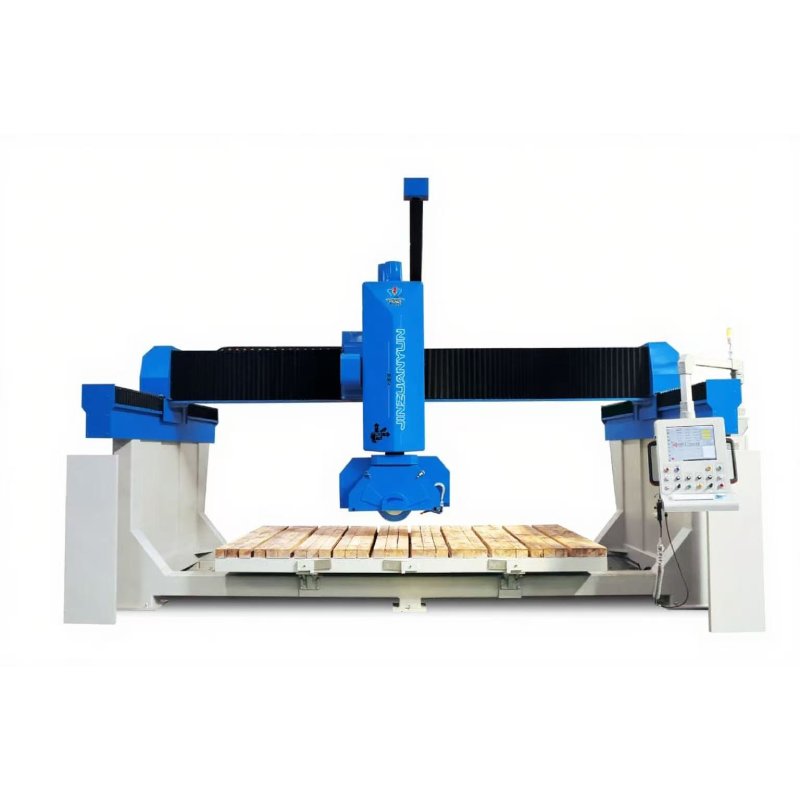
Large machines with a bridge-like structure, suitable for very large workpieces.
Used in industries like shipbuilding, aerospace, and heavy machinery.
Compact and Mini CNC Mills
Smaller footprint machines for light-duty and precision work.
Common in educational settings, small workshops, and prototyping labs.
Applications of CNC Milling Machines
CNC milling machines are widely used across multiple industries due to their precision, efficiency, and flexibility. Key applications include:
Aerospace Industry
Manufacturing turbine blades, engine housings, and structural components.
High precision and tight tolerances are critical for safety and performance.
Automotive Industry
Producing molds, gearboxes, engine parts, and custom components.
CNC mills improve efficiency and ensure consistent quality for high-volume production.
Medical Industry
Fabricating implants, surgical instruments, and prosthetics.
Allows complex geometries and precise dimensions essential for patient safety.
Electronics Industry
Producing enclosures, heat sinks, connectors, and circuit boards.
Small, detailed parts require the accuracy CNC milling provides.
Tooling and Die Making
Creating precision molds, dies, and fixtures for manufacturing.
CNC milling enables faster production cycles with minimal manual adjustment.
Prototype and Product Development
Rapidly producing prototypes for testing and design validation.
Allows quick iteration and modification before mass production.
By leveraging CNC milling, companies across these industries achieve higher accuracy, reduced errors, and increased productivity, making it an essential technology in modern manufacturing.
Advantages of CNC Milling
CNC milling machines offer high precision and repeatability, allowing manufacturers to produce parts with consistent quality. This level of accuracy is essential for industries like aerospace, automotive, and medical devices, where even minor deviations can cause major issues.
Automation in CNC milling significantly improves efficiency and reduces human error. Multi-axis milling enables the creation of complex geometries in fewer setups, saving time and labor costs while maintaining consistent results across production runs.
In addition, CNC mills are highly versatile, capable of working with a wide range of materials ,including metals, plastics, and composites. They are suitable for both prototype production and large-scale manufacturing, combining speed, flexibility, and reliability to enhance overall productivity.
CNC Milling vs CNC Turning
Feature
CNC Milling
CNC Turning
Motion
The tool rotates; the workpiece moves
Workpiece rotates; tool is stationary
Typical Parts
Complex shapes, flat surfaces
Cylindrical or symmetrical parts
Axes
Usually 3–5 axes
Typically 2–3 axes
Setup Complexity
Medium to high
Medium
Best Use Case
Multi-sided and detailed parts
Round components, high-volume production
How to Choose the Right CNC Milling Machine
Selecting the right CNC milling machine depends on several key factors, including your production needs, budget, and the materials you work with. First, consider the type of milling machine—vertical, horizontal, or 5-axis—based on the complexity of the parts and the required precision. Vertical mills are versatile and suitable for general-purpose machining, while horizontal and 5-axis machines are better suited for handling larger or more intricate components.
Next, evaluate the machine’s specifications, such as spindle speed, axis travel, table size, and load capacity. These factors determine the size of workpieces you can handle, the materials you can mill, and the overall production efficiency. For high-volume or precision-critical parts, investing in a machine with multiple axes and higher rigidity will ensure better performance and repeatability.
Finally, consider software compatibility, support, and maintenance. Ensure the CNC controller is compatible with your CAD/CAM software, and that the manufacturer provides reliable technical support and spare parts. A well-supported machine reduces downtime and long-term costs. By carefully assessing these factors, you can select a CNC milling machine that maximizes productivity, quality, and return on investment.
CNC Milling Machine Maintenance and Safety Tips
Proper maintenance and safe operation are essential to ensure the longevity and performance of CNC milling machines. Regular cleaning and lubrication of moving parts prevent wear and maintain accuracy, while checking tool holders, spindles, and worktables ensures stable and precise machining.
Operators should monitor tool wear and machine calibration to avoid defects and maintain consistent quality. Using the correct cutting tools and replacing worn components in time helps prevent damage to both the machine and the workpiece.
Safety is equally important. Always follow standard operating procedures, wear appropriate personal protective equipment, and ensure the machine’s emergency stops and guards are functional. Adhering to maintenance schedules and safety guidelines not only extends the machine’s lifespan but also ensures efficient, reliable, and safe production.
Conclusion
Understanding the CNC mill definition and working principle is essential for anyone involved in modern manufacturing. CNC milling machines combine precision, automation, and versatility to produce high-quality parts efficiently, making them indispensable across industries such as aerospace, automotive, medical, and electronics.
Choosing the right machine, maintaining it properly, and following safe operating practices ensure consistent performance and long-term reliability. For businesses looking to improve productivity and reduce production errors, investing in a high-quality CNC milling solution is a strategic decision.
Medical Device CNC Machining is the process of shaping medical components using computer numerical control, or CNC for short. The machine uses programmed commands to move cutting tools exactly where they need to go. This process removes material layer by layer until the desired shape appears. For example, when creating a titanium hip implant, a CNC machine can mill it with such precision that it fits the patient’s bone structure almost perfectly.
The primary difference between medical CNC machining and standard CNC machining lies in the level of precision and cleanliness. A typical part for an automotive engine might tolerate small imperfections, but a surgical screw cannot. In medical production, the parts must be sterile, burr-free, and often smaller than a grain of rice. This is where specialized techniques like micro-milling and Swiss-type turning come into play. These methods help make tiny and complex components without compromising accuracy.
Importance of CNC Machining in the Medical Industry
The medical industry depends on precision, and CNC machining provides exactly that. Every time a surgeon picks up an instrument or a patient receives an implant, CNC technology has played its part. Without it, producing consistent, safe, and accurate tools would be nearly impossible.
CNC machining is the backbone of medical device manufacturing because it meets the strict requirements of healthcare. Think about devices such as orthopedic implants, dental fixtures, and cardiovascular tools. Each one must match not just medical standards but also the patient’s unique anatomy. CNC machines make that possible through computer-guided control and repeatable accuracy. This process reduces human error and increases patient safety.
I’ve noticed that hospitals and device manufacturers rely heavily on biocompatibility and quality assurance. Standards like ISO 13485 and FDA 21 CFR Part 820 regulate how medical parts are made and tested. CNC machining helps companies meet those standards by allowing them to record, trace, and reproduce every step. If a defect occurs, engineers can trace it back to the exact tool path or batch number.
Types of CNC Machines Used in Medical Device Manufacturing
CNC Milling Machines
CNC milling machines are the workhorses of medical manufacturing. They cut and shape solid blocks of metal or plastic into complex geometries. When producing things like hip joints, knee implants, and surgical tools, the machine’s 5-axis movement allows it to reach all sides without repositioning the part. I once watched a 5-axis mill carve out a hip implant from titanium—it looked like magic in motion.
These machines are known for their ability to handle contours and curved shapes. That’s especially useful for implants that need to fit perfectly inside the human body. Each pass of the cutting tool removes microns of material until the final surface is smooth and precise. The result is a piece that’s ready for polishing or coating without heavy manual work.
CNC Turning and Swiss-Type Lathes
Turning machines, especially Swiss-type lathes, handle long and thin components like bone screws, rods, and catheters. The name “Swiss” comes from the Swiss watch industry, where precision is everything. In medical production, the same level of accuracy is used to create devices that can safely stay inside the body for years.
These machines can handle very small diameters—sometimes under one millimeter—and maintain perfect concentricity. That means each screw thread or pin sits exactly where it should. It’s fascinating how these machines work: the material moves instead of the cutting tool, reducing vibration and allowing extreme precision. It’s like watching a ballet, but with steel.
CNC Grinding and Polishing Machines
Grinding and polishing machines finish what others start. After milling or turning, many medical parts require mirror-like surfaces to avoid tissue irritation. Grinding removes microscopic imperfections, and polishing adds a fine, reflective sheen. For surgical blades or implants, that final polish means smoother contact and less friction during use.
In cleanrooms, these finishing machines run quietly and carefully. I’ve seen technicians measure the final surface using light reflection tools to ensure no scratches remain. That level of perfection isn’t just for looks—it’s for safety.
CNC EDM (Electrical Discharge Machining)
EDM uses electrical sparks to shape materials that are too hard for normal cutting tools, like titanium or stainless steel. It’s perfect for creating small holes, cavities, and intricate features on surgical instruments. Because there’s no physical contact between tool and material, EDM can achieve shapes that standard tools can’t reach.
This process is especially common for tools like laparoscopic tips, orthopedic screws, and micro-instruments. Watching an EDM machine work is oddly calming—it makes thousands of tiny sparks, each removing a speck of metal. Slowly, the final part emerges, precise down to fractions of a micron.
Multi-Axis Machining Centers
Multi-axis centers combine milling, turning, and drilling into one machine. This setup saves time by eliminating multiple setups. It’s perfect for orthopedic implants, dental abutments, and custom surgical jigs. When I visited a facility that made spine implants, I noticed how one multi-axis machine could produce a full set of parts in a single run.
The main advantage of multi-axis machining is accuracy with efficiency. By machining a part from all angles without stopping, it minimizes misalignment. That means the final component needs little or no adjustment before inspection.
Common Medical Devices and Components Made with CNC Machining
When I first stepped into a medical machining workshop, I was surprised by how many different medical parts come from CNC machines. Almost every metal or plastic component used in hospitals or surgeries has likely passed through one of these precision systems. Here’s how CNC machining supports various medical fields:
Orthopedic Implants
CNC machining is used to make hip joints, spinal cages, bone screws, and knee implants.
• These parts must fit the patient’s bone structure with extreme accuracy.
• Titanium and cobalt-chrome alloys are the most common materials for strength and biocompatibility.
• The smooth finish reduces friction and prevents tissue irritation.
• I once held a finished hip cup—it was so polished it reflected light like a mirror. That surface wasn’t just for looks; it helps the implant move smoothly within the body.
Surgical Instruments
• Instruments like forceps, scalpels, clamps, and drill guides rely on CNC precision for consistent sharpness and shape.
• CNC machining ensures every piece is balanced and performs reliably during surgery.
• Stainless steel and titanium are often used because they handle repeated sterilization without damage.
• Laser inspections confirm every edge is sharp and smooth.
• Watching these parts get checked under magnifiers made me realize—surgeons rely on perfection every single time.
Dental and Maxillofacial Components
• CNC machines create crowns, abutments, and dental implants that match a patient’s mouth perfectly.
• Dentists can send 3D scans directly to the manufacturer for same-day milling.
• Materials include ceramics, stainless steel, and titanium.
• These machines cut with such precision that dental parts often need only a light polish before use.
• I once saw a machine mill a crown from a ceramic block—it took less than ten minutes and fit flawlessly.
• These parts are often smaller than a fingernail but must perform reliably for years inside the human body.
• Materials like titanium and stainless steel resist corrosion and maintain stability in body fluids.
• Engineers often say, “If you can see the flaw, it’s already too big.” That sums up the precision needed here.
• Every spark, cut, or polish is controlled with micrometer accuracy to avoid any error.
Diagnostic and Laboratory Equipment
• CNC machining also supports MRI machines, CT scanners, and robotic surgery systems.
• Components include brackets, frames, instrument arms, and sensor housings.
• These parts need to stay stable and vibration-free for accurate test results.
• Aluminum and high-performance plastics are preferred for lightweight strength.
• I noticed that even the smallest mount or bracket inside a scanner must meet exact size standards—it’s how machines keep producing reliable readings for years.
Prosthetics and Assistive Devices
• CNC machines create custom prosthetic joints, sockets, and connectors that improve patient mobility.
• Personalized designs allow a better fit and comfort for daily wear.
• Advanced 5-axis milling enables natural, curved surfaces that align perfectly with body contours.
• Combining metal and polymer machining provides strength without adding weight.
• It’s heartwarming to see how technology turns raw materials into life-changing support devices.
Robotic Surgical Components
• CNC machining produces arms, joints, and end-effectors for robotic-assisted surgeries.
• These parts must move precisely and smoothly without any mechanical play.
• Stainless steel and lightweight aluminum are used for stability and responsiveness.
• Each joint undergoes multiple tolerance tests before final assembly.
• I once saw a robot arm component fail inspection for being off by 0.0005 mm — the engineer just smiled and said, “That’s why we check.”
Materials Used in Medical Device CNC Machining
Titanium and Titanium Alloys
Titanium is the superstar of medical materials. It’s strong, light, and doesn’t rust or cause allergic reactions. You’ll find it in implants, bone screws, and even artificial joints. The downside? It’s tough to cut. Machining titanium requires sharp tools and slower speeds to avoid overheating. But when done right, the result is a component that lasts for decades inside the body.
Stainless Steel (316L, 17-4PH)
Stainless steel remains a popular choice for reusable surgical instruments because it’s durable, affordable, and easy to sterilize. Grades like 316L and 17-4PH resist corrosion and can handle repeated exposure to heat and cleaning chemicals. CNC machines shape them into blades, clamps, and other durable components.
Aluminum Alloys
Aluminum alloys are used mainly in non-implantable components such as diagnostic equipment or housings for devices. They’re lightweight and conduct heat well, making them ideal for machines that need to stay cool. They’re also easy to machine, which keeps costs down.
Plastics and Polymers (PEEK, PTFE, Ultem, Delrin)
Plastics like PEEK, PTFE, Ultem, and Delrin are widely used for non-implantable components such as surgical trays, fixtures, and instrument handles. PEEK, in particular, is a favorite for temporary implants because it’s strong and resists chemicals.
Specialty Alloys and Ceramics
Some parts need special materials like Nitinol, a shape-memory alloy that can return to its original form after bending, or medical-grade ceramics, which resist wear and heat. These materials are often used in dental and orthopedic applications.
CNC Machining Processes for Medical Devices
Prototyping and Low-Volume Production
When developing new medical devices, designers need prototypes fast. CNC machining can create a test-ready prototype in just a few hours. This allows teams to check function, fit, and design before moving into full production.
Full-Scale Production
Once a prototype passes all tests, full-scale production begins. High-speed CNC machines run multiple parts at once, maintaining the same precision across thousands of units. Automation ensures consistency while reducing manual handling.
Post-Processing Techniques
After machining, medical parts go through finishing steps like deburring, polishing, electropolishing, passivation, or anodizing. These processes remove sharp edges, smooth surfaces, and prepare the part for sterilization. For implants, surface finishing can even improve how tissue bonds with the material.
Precision and Quality Control in Medical CNC Machining
If there’s one thing I’ve learned from spending time around medical machinists, it’s that “close enough” doesn’t exist in their vocabulary. Precision isn’t just expected — it’s demanded. In the medical field, a tiny error can cause a major problem, so quality control is almost a sacred process.
CNC machining for medical devices focuses on tolerances as tight as ±0.001 mm. To put that into perspective, that’s smaller than a grain of dust. Every part goes through detailed measurement using tools like coordinate measuring machines (CMMs), optical scanners, and laser micrometers. These instruments check every curve, edge, and angle to confirm that each component meets design specifications.
Advantages of CNC Machining for Medical Devices
• Extreme precision and repeatability
• Compatibility with biocompatible materials
• Flexibility for custom, patient-specific designs
• Rapid prototyping and faster time-to-market
• Clean and safe manufacturing environment
• Reduced human error and waste
• Scalability from prototype to production
Choosing the Right CNC Machining Partner for Medical Devices
Verified Certifications
• Choose a company with ISO 13485 certification for medical manufacturing.
• Ensure they follow FDA 21 CFR Part 820 for quality and documentation.
• Ask for proof of regular audits and inspection records.
Experience with Biocompatible Materials
• Verify that they can handle titanium, stainless steel, and medical-grade polymers.
• Look for shops that use dedicated tools and coolants to avoid contamination.
• Ask about past projects involving implants or surgical parts.
Advanced Equipment and Technology
• The partner should have multi-axis machines, Swiss lathes, and micro-machining setups.
• Cleanroom machining facilities are a strong sign of professionalism.
• Automated inspection and measurement tools add another layer of reliability.
Proven Quality Assurance System
• Every component should be traceable from start to finish.
• Internal audits and inspection logs ensure ongoing consistency.
• Ask if they use CMM or laser scanning for part verification.
Real Industry References
• Check case studies or client testimonials from hospitals and medical suppliers.
• Visit their facility if possible—cleanliness and organization say a lot.
• Genuine experience in medical-grade machining should be visible in their past work.
Final Thoughts
After seeing how much care and detail go into every stage of medical device CNC machining, I’ve come to respect it as both an art and a science. These machines might look like ordinary equipment, but they carry the responsibility of human lives. The precision isn’t just about numbers—it’s about trust.
So, the next time you walk into a hospital and see a metal implant or a shiny surgical tool, remember that it didn’t just appear—it was carefully crafted, checked, and perfected through CNC machining.
Investing in a used excavator is one of the smartest ways for contractors to save money while still getting high-quality construction equipment. However, buying a second-hand machine requires careful evaluation to avoid unexpected repair costs. Here’s a step-by-step guide to help you make the right decision.
1. Define Your Project Needs
Before buying, ask yourself:
What type of work will the excavator handle? (earthmoving, demolition, mining, or roadwork)
Do you need a mini excavator (1.5–6 tons) for urban projects or a large excavator (30+ tons) like the Komatsu PC450 for heavy-duty operations?
Choosing the right size saves fuel and improves efficiency.
2. Check Machine Hours
One of the most important factors in evaluating a used excavator is working hours. Machines with under 5,000 hours are generally considered low-hour and still have a long lifespan. A Caterpillar 320D with 4,500 hours or a Hyundai R220LC-9S with 6,000 hours can still deliver strong performance.
3. Inspect Key Components
Engine: Look for smoke, unusual noise, and oil leaks.
Hydraulics: Check for smooth operation and no jerky movements.
Undercarriage: Worn-out tracks can be expensive to replace.
Boom and Bucket: Inspect for cracks or welds that may indicate past damage.
Brands like Volvo and Doosan are known for durable hydraulic systems, while CAT and Komatsu excel in undercarriage strength.
4. Review Service Records
Always ask for maintenance history. A well-maintained machine with regular servicing is more reliable than a low-hour machine with poor records. Machines from rental fleets often have complete service logs, making them a safe choice.
5. Consider After-Sales Support
Buying a popular brand like Caterpillar, Komatsu, Hyundai, or SANY ensures easy access to spare parts. Global availability of parts reduces downtime and keeps your project running smoothly.
6. Work with Trusted Dealers
When possible, buy from a reputable dealer who offers inspection reports and warranties. This minimizes risk compared to private sellers.
When it comes to construction or mining projects, the excavator is often the most critical piece of equipment on site. It is the machine that moves earth, loads trucks, and shapes the landscape. However, not every excavator is the same, and the difference between choosing the right one and the wrong one can mean the difference between profit and loss.
The Role of an Excavator in Modern Construction
An excavator is more than just a digging machine—it’s the backbone of almost every construction project. From site preparation and trenching to demolition and material handling, the excavator is used in every phase. Contractors rely on these machines for their strength, versatility, and speed.
However, the wrong excavator size, brand, or condition can increase fuel costs, delay project timelines, and reduce efficiency. Choosing the correct excavator directly impacts productivity and long-term profitability.
New vs. Used Excavators — What’s Right for You?
One of the first decisions contractors face is whether to buy a brand-new excavator or a used one. While new machines offer the latest technology, a used excavator for sale can deliver excellent value for money—especially for contractors in developing regions where cost control is essential.
A quality used Hyundai, Komatsu, or SANY excavator can perform like new if properly maintained. The key is to purchase from a trusted heavy equipment supplier who inspects, tests, and services every unit before shipment.
Factors to Consider When Selecting an Excavator
Operating Weight and Power — The size of the excavator must match the type of work. A 22-ton machine like the Hyundai 220LC or SANY SY215 is ideal for general construction, while a 35-ton or 50-ton excavator suits mining and road building.
Hydraulic System — A strong hydraulic system ensures smooth control and digging force. Always check for leaks and inspect the main pump before purchase.
Fuel Efficiency — Modern excavators are designed with eco-friendly engines that reduce fuel consumption without compromising performance.
Parts Availability — Choose a brand with widely available spare parts. Hyundai, Komatsu, and Caterpillar all have extensive global networks.
Machine History — For used units, check the working hours, maintenance records, and component wear—especially the undercarriage, which accounts for 50% of operating cost.
How the Right Excavator Saves You Money
A properly matched excavator not only improves speed but also reduces unnecessary fuel consumption and maintenance. Using an oversized excavator for light work wastes energy, while an undersized one wears out faster. With the right match, you’ll see:
Lower fuel and maintenance costs
Fewer breakdowns
Higher operator comfort and productivity
Longer machine lifespan
Final Thoughts
Choosing the right excavator is not just a technical decision—it’s a business strategy. It affects your fuel bills, project schedules, and customer satisfaction. Whether you are buying a used excavatoror investing in a new model, consider your long-term operation cost, the quality of after-sales service, and the availability of spare parts.
In construction, every minute counts, and every liter of diesel adds up. The smarter your equipment choices, the stronger your business foundation becomes.
An excavator is a serious investment, whether new or used. Keeping it in good condition means maximizing your return on that investment. Proper maintenance not only extends the life of your machine but also ensures consistent performance and safety for operators.
Here’s a complete guide on how to keep your excavator in top working shape—so your projects stay efficient and profitable.
1. Daily Inspection Before Operation
Before every shift, conduct a quick but detailed walk-around inspection. Check for oil leaks, loose bolts, or unusual wear. Look at the track tension and inspect the teeth on the bucket. Daily attention to small issues prevents costly repairs later.
Operators should also check fluid levels—engine oil, hydraulic oil, coolant, and fuel. A few minutes spent on inspection can save hours of downtime.
2. Keep the Hydraulic System Clean
The hydraulic system is the heart of your excavator. Contaminated oil can lead to pump failure or system inefficiency. Always use clean filters and replace them according to the manufacturer’s schedule. If you notice slow movement, low digging power, or strange noises, stop operation immediately and inspect the system for leaks or air contamination.
3. Maintain the Undercarriage
The undercarriage accounts for nearly 20% of an excavator’s total cost—and almost 50% of its maintenance expenses. Regular cleaning after work, especially in muddy conditions, prevents soil and rocks from damaging the rollers and sprockets. Track tension should be checked weekly. Too tight increases wear; too loose can cause track derailment.
4. Engine and Cooling System Care
An overheated engine can cause major damage. Keep the radiator and coolers clean from dust or debris. Replace air filters on time, especially if you’re working in desert or quarry environments. A well-maintained engine ensures smoother operation, lower fuel consumption, and fewer breakdowns.
5. Store and Operate Properly
When the excavator is not in use, store it under cover to prevent rust and weather damage. If you operate in extremely cold or hot climates, adjust your maintenance schedule accordingly. Also, always train operators properly—many component failures result from incorrect handling rather than mechanical defects.
6. Work With a Reliable Supplier
Whether you’re maintaining a brand-new Hyundai or a used Komatsu excavator, spare parts and technical support are crucial. Partner with a trusted construction machinery supplier who can provide genuine parts, professional inspection, and after-sales guidance.
Why Maintenance Equals Profit
Well-maintained excavators work faster, use less fuel, and break down less often. This means more completed projects, lower repair bills, and higher resale value when you decide to upgrade.
Neglect, on the other hand, shortens lifespan and increases total cost of ownership. A machine that fails on site can halt the entire project—something no contractor can afford.
Final Words
Caring for your excavator is not just about keeping it clean—it’s about running a smarter, more profitable operation. By maintaining your machine regularly and buying from reliable suppliers, you ensure long-term success in the heavy equipment business.
An excavator is one of the most important machines on a construction site. Whether you use it for earthmoving, mining, or road building, keeping it in excellent condition is the key to long-term performance and lower operating costs. Here are some essential maintenance tips every operator and contractor should follow.
1. Perform Daily Inspections
Before starting work, always check:
Engine oil and coolant levels
Hydraulic oil level
Track tension and undercarriage condition
Filters and air intake system Spotting small issues early can prevent major breakdowns.
2. Keep the Hydraulic System Clean
The hydraulic system is the “heart” of an excavator. Regularly check hoses and cylinders for leaks and replace worn seals. Always use clean hydraulic oil and change filters as recommended by the manufacturer.
3. Take Care of the Undercarriage
The undercarriage often wears the fastest. Clean mud, rocks, and debris at the end of each day to avoid unnecessary stress. Proper track tension also improves fuel efficiency and extends service life.
4. Use Genuine Spare Parts
When replacing components, always choose original spare parts. They provide better durability and reduce the risk of breakdowns, ensuring your excavator works reliably in tough environments.
5. Follow Scheduled Servicing
Stick to the manufacturer’s service intervals for oil changes, filter replacement, and system checks. Preventive maintenance costs much less than emergency repairs.
Conclusion
A well-maintained excavator is safer, more efficient, and has a higher resale value. By following these maintenance tips, contractors can save fuel, reduce downtime, and keep their projects running smoothly.
Excavators are built for heavy-duty operations, but no matter how strong the machine is, certain components are exposed to constant friction, pressure, and impact. These are called wear parts, and they play a vital role in the machine’s performance. Replacing them at the right time is essential to avoid downtime and costly repairs.
Below is a detailed guide to common excavator wear parts and their typical replacement intervals.
1. Bucket Teeth
Bucket teeth face the toughest conditions because they make direct contact with soil, rocks, and abrasive materials.
Average lifespan:200–500 hours
Factors that reduce lifespan: working in rocky terrain, improper digging angle, and lack of timely replacement.
Replacement tip: If bucket teeth look blunt or cracked, replace them immediately to maintain efficient digging and protect the bucket.
2. Cutting Edges
Mounted on the bucket, cutting edges protect the bucket body and improve digging efficiency.
Average lifespan:400–800 hours
Factors that reduce lifespan: high-intensity digging, using worn teeth for too long, or operating on sharp stones.
Replacement tip: Worn edges increase fuel consumption and put more strain on the machine. Regular inspection helps extend bucket life.
3. Undercarriage Parts (Tracks, Rollers, Sprockets, Idlers)
The undercarriage supports the machine’s weight and is constantly exposed to dirt, mud, and rocks. It’s also one of the most expensive systems to maintain.
Average lifespan:1,200–2,000 hours
Factors that reduce lifespan: working in abrasive terrain, improper track tension, or lack of cleaning after work.
Replacement tip: Clean the undercarriage daily and adjust track tension as recommended. Early replacement of worn parts prevents damage to the entire system.
4. Hydraulic Hoses and Seals
The hydraulic system is the “heart” of the excavator, and its components are under high pressure.
Average lifespan:1–2 years depending on usage
Factors that reduce lifespan: extreme heat, contamination in hydraulic oil, and poor-quality replacement parts.
Replacement tip: Inspect monthly for leaks, cracks, or swelling. Even small leaks can lead to costly system failures.
5. Filters (Oil, Fuel, and Air Filters)
Filters keep the excavator clean from dust and impurities, protecting the engine and hydraulic system.
Average lifespan:250–500 hours
Factors that reduce lifespan: working in dusty or sandy environments, poor fuel quality, or irregular servicing.
Replacement tip: Always replace filters on schedule. A clogged filter increases fuel consumption and reduces engine performance.
Why Timely Replacement Is Important
Prevents downtime – Replacing worn parts avoids sudden breakdowns that can delay projects.
Improves efficiency – Sharp teeth, clean filters, and healthy hydraulics make the machine more fuel-efficient.
Reduces repair costs – Small parts are cheaper to replace than repairing major components.
Extends service life – A well-maintained excavator can last thousands of hours longer.
Higher resale value – Buyers prefer machines with documented maintenance and timely replacement of wear parts.
Conclusion
There is no “one-size-fits-all” rule for replacing excavator wear parts because every jobsite is different. Harsh working environments and poor maintenance shorten lifespan, while regular inspections and genuine parts extend it.
As a general rule:
Inspect daily
Replace on schedule
Never ignore signs of wear
By doing so, you can ensure your excavator remains safe, efficient, and profitable for years to come.
When it comes to modern construction projects, an excavator is one of the most essential pieces of equipment. Whether you are working on road building, mining, demolition, or large-scale earthmoving, choosing the right excavator can significantly improve efficiency and reduce costs.
1. Consider the Size and Weight
Excavators come in different categories such as mini excavators, medium excavators, and large excavators. For smaller urban projects, a 1.5–6 ton mini excavator is ideal due to its compact size and ability to maneuver in tight spaces. For mining and heavy construction, larger models like the Komatsu PC450 or Caterpillar 336 are better suited.
2. Engine Power and Fuel Efficiency
Brands like Hyundai, Doosan, and Volvo are well-known for their fuel-efficient engines. A reliable engine means less downtime and lower operating costs. Always compare horsepower and fuel consumption before purchasing.
3. Attachments and Versatility
An excavator is not just for digging. With attachments like hydraulic breakers, grapples, and augers, one machine can handle multiple tasks. For example, the SANY SY365H is popular because it supports a wide range of attachments.
4. Spare Parts and After-Sales Support
When investing in a machine, always consider parts availability. Brands like Caterpillar and Komatsu have global support networks, making it easier to source spare parts quickly.
5. New vs Used Excavators
A used excavator with low working hours can be a cost-effective choice. Many companies offer fully inspected second-hand excavators such as Hitachi ZX200-3 or Hyundai R220LC-9S, which still provide strong performance at a lower price.
✅ Conclusion: Choosing the right excavator depends on your project size, budget, and long-term maintenance needs. By comparing brands like CAT, Komatsu, Volvo, Hyundai, SANY, and Doosan, you can make the best investment for your business.