The 35th CSGIA China International Screen Printing and Digital Printing Exhibition

This year marks the 100th anniversary of the founding of the Communist Party of China and the first year of the "14th Five-Year Plan". The China Printing Technology Association Screen Printing and Image Production Branch (CSGIA), Guangzhou Teyin Exhibition Service Co., Ltd. (TEYIN), Frankfurt Exhibition (Hong Kong) China (Shanghai) International Screen Printing and Digital Printing Technology Exhibition 2021 ("The 35th CSGIA China International Screen Printing and Digital Printing Exhibition", referred to as DS Printech China) co-sponsored by) Co., Ltd. will be held on August 6, 2021. It was grandly held in Hall N1-N2 of Shanghai New International Expo Center on the 8th. To


The whole industry must actively respond to the great call of General Secretary Xi Jinping, keep upright, innovate, work hard, use exquisite creativity, exquisite craftsmanship and exquisite products to showcase the new momentum of the screen printing industry, and better satisfy the people’s desire for a better life. Yearning to help our industry move from a big printing country to a printing power.


The prosperous years will last forever. Only by not forgetting the original aspiration and being innovative and enterprising can we achieve transcendence. Lingtie (Xiamen) Machinery Co.,Ltd responds to the national call for carbon neutrality and carbon peaks, and strives to implement the innovative environmental protection concept of green printing, widely disseminates new technologies and new achievements, and continues to create a brand new screen printing industry in the new era Style.

The Advantages of Screen Printing

Screen printing belongs to stencil printing, which is called the four printing methods together with lithography, embossing and gravure printing. Hole printing includes transcription, perforated pattern, spray and screen printing, etc. The principle of stencil printing is: the printing plate (the perforations that can pass ink are made on the base of the paper film plate or other plates). When printing, the ink is transferred to the substrate (paper, ceramics, etc.) through the perforations of the stencil under a certain pressure. ) To form an image or text.


The 2021 version of China's screen printing market special research analysis and development prospect forecast report released by Industry Research Network believes that the ink is transferred to the substrate through the mesh of the graphic part through the squeeze of the squeegee during printing, and the formation is the same as the original Graphic. The screen printing equipment is simple, convenient to operate, simple in printing and plate making, low in cost, and strong in adaptability. Screen printing has a wide range of applications. Common printed materials include: color oil paintings, posters, business cards, binding covers, product signs, printed and dyed textiles, etc.

https://www.xmlingtie.com/pet-film-roll-label-printing-machine_p99.html

The development direction of screen printing equipment enterprises under the new tariff in the United States

According to China Customs statistics, China's printing equipment (including screen printing, digital printing, offset printing machines, etc.) exports to the United States will be about 1.2 billion US dollars in 2023, accounting for 15%~18% of China's global exports of printing equipment. Among them: - Screen printing machines account for about 15% (about $180 million). - Digital printing equipment grew rapidly (e.g., UV flatbed printers), driven by demand from the U.S. packaging and advertising industries.

 In 2024, China's printing equipment exports to the United States will be in the range of 1.1 billion ~ 1.3 billion US dollars, digital printing and high-end screen printing equipment are still the main growth points, while traditional models are under pressure. In 2025, printing equipment manufacturers will face the game of new tariff policy and alternative supply chains. Exports to USA will be suppressed in the short term. 

Relocation of production capacity, overseas construction of factories Diversification of the market ;

Shift to emerging markets: expand exports to ASEAN (such as Vietnam, Thailand clothing printing demand), the Middle East (advertising logo market), and Latin America. 

Domestic substitution opportunities: China's photovoltaic, electronic products and other industries for the growth of demand for screen printing equipment (such as photovoltaic electrode printing);

Technology upgrading, the development of high value-added products, entrepot trade, etc. may become the future development plan that enterprises of screen printer need to consider.

The Impact of AI Technology Development on Silkscreen Printing

The Impact of AI Technology Development on Silkscreen Printing

In the realm of printing technologies, the advent and rapid evolution of Artificial Intelligence (AI) have stirred significant disruptions and transformations, particularly impacting traditional methods such as silkscreen printing. While AI and silkscreen printing may seem worlds apart, the interplay between these two entities is far more intricate and influential than one might initially assume.

Traditionally, silkscreen printing, also known as serigraphy, has been valued for its ability to produce vibrant, durable images on a wide array of materials, from fabrics to ceramics. This technique relies on a mesh screen with a stencil that blocks out certain areas while allowing ink to pass through and adhere to the substrate. Its distinctive charm lies in the tactile quality and the ability to achieve intricate designs with consistency.

The advent of AI technology has introduced a paradigm shift, particularly in the realm of design, automation, and data analysis. AI algorithms can generate intricate patterns, analyze consumer preferences, and optimize production processes with unprecedented precision and speed. This has led to a number of implications for silkscreen printing:

‌Enhanced Design Capabilities‌: AI-driven design tools can generate a myriad of patterns and graphics, potentially revolutionizing the creative process in silkscreen printing. Designers can now leverage AI to explore new aesthetic boundaries, blending traditional silkscreen aesthetics with modern, algorithmic artistry.

‌Increased Efficiency and Automation‌: AI-integrated machinery can streamline production workflows, enhancing the efficiency of silkscreen printing operations. From automatic color matching to predictive maintenance of printing equipment, AI can significantly reduce downtime and improve overall productivity.

‌Personalization and Customization‌: Leveraging AI for data analysis allows silkscreen printers to better understand consumer preferences and trends. This, in turn, enables the creation of highly personalized and customized products, catering to the demands of a market that increasingly values uniqueness and bespoke experiences.

‌Quality Control and Consistency‌: AI-powered quality control systems can detect defects and inconsistencies in printed materials with remarkable accuracy. This ensures that silkschttps://www.xmlingtie.com/UV-roll-to-roll-printing-machine_p131.htmlreen prints maintain a high standard of quality, enhancing consumer satisfaction and brand reputation.

However, it is crucial to note that AI does not intend to replace silkscreen printers but rather to augment their capabilities. The human touch, the artistry, and the craftsmanship inherent in silkscreen printing remain irreplaceable. AI serves as a tool to elevate this art form, pushing its boundaries and making it more accessible and efficient.

In conclusion, the development of AI technology is undeniably impacting silkscreen printing, offering new opportunities for creativity, efficiency, and customization. As AI continues to evolve, it will undoubtedly play a pivotal role in shaping the future of this centuries-old craft, blending the precision of technology with the soul of human creativity.

The maintenance methods of screen printing machines

The maintenance methods of screen printing machines include: 

daily maintenance, long-term maintenance, regular inspection and maintenance, and cleaning and maintenance steps. 

Daily maintenance Before operating the screen printing machine, the operator should first check whether there is dust left by chips at the junction of the movable guide rail surface of the screen printing machine, and keep it free of oil stains, brushing, scratches and other phenomena

2. If the screen printing machine is not used for a long time, it should be wiped clean and placed in a cool, dry environment with good ventilation effect 

3. Experienced operators should not disassemble the touch screen without the guidance of a professional master, because it is easy to damage the touch screen. Operators must regularly conduct condition surveys, accuracy inspections, and adjustments of screen printing machine equipment, and carry out fault analysis and condition monitoring

4. In the daily maintenance of the screen printing machine, it is strictly forbidden for the operator to disassemble the parts, and when the screen printing machine fails, the emergency stop switch must be pressed immediately and the main power supply must be turned off, and the maintenance personnel must be notified. 

Cleaning and maintenance steps: Cleaning of the walking arm: first remove the cover, then check whether there are any debris on the walking arm track, clean up the debris with a duster, then use a brush to clean the debris in the gap, then scrub the track with an alcohol-free dust cloth, and then add some track oil to the track 

5. Inspection of servo motor: manually control the motor movement, observe whether the motor movement is stable, touch the motor to see if there is heat, long-term movement will lead to loose transmission shaft connection, if necessary, adjust the motor PID parameters and adjust the level; Check whether the connecting belt of the motor is loose and broken, and adjust it if necessary

The working principle of the screen printing machine

The working principle of the screen printing machine ① The working cycle program of the flat screen flat screen printing machine takes the flat screen platform type monochrome semi-automatic hand screen printing machine as an example. One of its working cycles is: feeding parts → positioning → printing → Lower the squeegee, raise the ink return plate → Squeegee stroke → Raise the squeegee → Lower the ink return plate → Lift the plate → Return ink stroke → Release positioning → Receiving.
In the continuous cycle action, as long as the function can be realized, the time occupied by each action should be as short as possible to shorten the period of each work cycle and improve the work efficiency.
③ Embossing line. During the printing stroke, the squeegee squeezes the ink and the screen printing plate, so that the screen printing plate and the substrate form a contact line, which is called a nip line. This line is at the edge of the squeegee, and countless embossed lines form the printing surface. Achieving an ideal nip line is difficult because the printing stroke is a dynamic process.
③The working principle of screen printing machine. Taking the commonly used hand-shaped screen printing machine as an example, the working principle of the screen printing machine can be described as follows: the power is transmitted through the transmission mechanism, and the squeegee squeezes the ink and the screen printing plate during the movement, so that the screen printing The printing plate and the substrate form an embossing line. Since the screen has tensions N1 and N2, a force F2 is generated on the squeegee. Under the action of the squeezing force F1 of the squeegee, through the mesh, the printing is missed from the moving embossing line to the substrate.
During the printing process, the screen printing plate and the squeegee move relative to each other, and the extrusion force F1 and the rebound force F2 also move synchronously. Dirty blots. That is, the screen is constantly deformed and rebounded during the printing stroke.
The squeegee is separated from the substrate together with the screen printing plate after the one-way printing is completed, and at the same time, the ink is returned to the back, that is, a printing cycle is completed. The distance between the top of the substrate and the reverse side of the screen printing plate after returning to ink is called the same plate distance or screen distance, which should generally be 2 to 5 mm. In manual printing, the operator's technique and proficiency directly affect the formation of the embossing line. In practice, screen printing workers have accumulated a lot of valuable experience, which can be summarized into six points, that is, to ensure the linearity, uniformity, isometric, pressure equalization, centering and verticality in the movement of the squeegee. That is to say, the squeegee should move in a straight line during printing, and it should not be shaken left and right; it should not be slow forward and fast, fast forward and then slow or suddenly slow and fast; the inclination angle to the ink plate should remain unchanged, and special attention should be paid to overcoming the inclination angle. A common problem that gradually increases; the printing pressure should be kept uniform; the distance between the squeegee and the inner side of the screen frame should be equal; the ink plate and the frame should be kept perpendicular

How Do Low-Temperature Air-Cooled Chillers Achieve Effective Heat Recovery

In modern industrial and building applications, the energy consumption of low-temperature air-cooled chillers is a growing concern. Recovering waste heat from these systems can significantly improve overall energy efficiency while reducing operational costs and environmental impact. So, how exactly does heat recovery work in these systems?

Energy-efficient cooling Heat pump integration


1. Using High-Efficiency Heat Exchangers

A key method for heat recovery is integrating high-efficiency heat exchangers into the chiller system.
When the air-cooled chiller releases waste heat, this thermal energy is transferred to a secondary medium—such as water or air—inside the heat exchanger. The recovered heat can then be reused for:
• Preheating fresh air
• Supplying domestic hot water
• Industrial process heating
By using counter-flow heat exchange, hot and cold fluids make full thermal contact, maximizing heat transfer efficiency. Compact and efficient plate heat exchangers are particularly suitable for air-cooled chiller heat recovery due to their high thermal conductivity and small footprint.

2. Integrating Heat Pump Technology

Another effective approach is integrating heat pump technology into the system.
Even though low-temperature air-cooled chillers operate at lower temperatures, their exhaust air or cooling loop still contains recoverable heat energy.
A heat pump can:
• Absorb low-grade heat from the chiller's exhaust
• Compress and elevate the temperature
• Deliver the upgraded heat to other applications
Using VRF (Variable Refrigerant Flow) heat pump systems allows flexible heat recovery according to real-time demand and adapts efficiently to varying operating conditions of the chiller.


3. Optimizing the Control System

A smart and precise control system is essential for effective heat recovery.
The control system continuously monitors parameters such as:
• Temperature
• Pressure
• Flow rate
Based on real-time data, it adjusts the heat recovery equipment to ensure optimal performance.
When multiple heat-use terminals exist, the system must also intelligently distribute heat to meet different demands without wasting energy.

Conclusion

Through the combined use of high-efficiency heat exchangers, integrated heat pump technology, and intelligent control strategies, low-temperature air-cooled chillers can achieve substantial heat recovery. This not only enhances system energy efficiency but also contributes to greener and more economical operation.


What are the advantages of stainless steel pumps? Introduction to common stainless steel pumps

What are the advantages of stainless steel pumps?Introduction to common stainless steel pumps


When transporting weak acid, weak alkali, salt and other media, the corrosion resistance of stainless steel pump is significantly better than that of other materials, but the price of stainless steel pump is slightly higher.


When transporting weak acid, weak alkali, salt and other media, the corrosion resistance of stainless steel pump is significantly better than that of other materials, but the price of stainless steel pump is slightly higher. As the saying goes, price equals price, so what are the highlights of stainless steel pumps compared with other materials?


stainless steel pumps are very resistant to corrosion and, more importantly, very durable. Stainless steel pumps are usually mainly used in different working and living environments in various ways, some of these social and environmental problems need to be corrosion-resistant, and some enterprises need our stronger drainage design capabilities, stainless steel pumps are made of high-strength stainless steel raw materials, which have strong corrosion resistance, and the use of pumps for this teaching material, there is no need to worry that the effect of the pump will be affected by the external economic environment, which is a stainless steel pump can be more suitable for students in various harsh environments, and continue to work healthily and stably.


stainless steel pumps are a little more expensive in their class, but their performance is impeccable. Stainless steel pumps have been products in the industry to occupy a position, and its cost-effective nature is self-evident.


stainless steel water pump can operate stably for a long time, the failure rate is very low after use, and the later maintenance is also very simple, which can meet the requirements of users for long-term use. Stainless steel pumps can convey a variety of different media, from tap water to industrial liquids, stainless steel pumps through stainless steel flow plate stamping process, adapt to different temperatures, flow rates and pressure ranges, stainless steel pumps are non-corrosive or lightly corrosive liquids, can transport temperatures up to 120


Common stainless steel pumps


Stainless steel sewage submersible pump
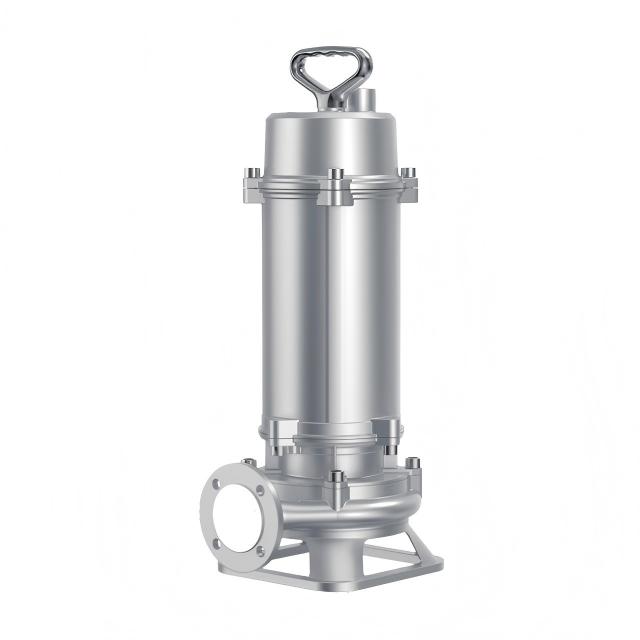
 

Flow: 10~2800m³/h

Head:6~75m

Power:0.75~250kW


Product description:


1. Adopting stainless steel precision casting shell, it has the characteristics of corrosion resistance,environmental protection,high lift, and large flow rate.

2. The oil chamber adopts a double-sided mechanical seal made of fluororubber, while the outer chamber adopts a single-sided fluororubber mechanical oil seal structure, effectively reducing the problem of sealing water ingress caused by friction between the skeleton oil seal and the shaft.

3. The motor adopts high-temperature wire, F-class insulation, and thermal protection device, effectively extendina the service life of the pump.

4. According to customer requirements, a mixing device can be equipped, which generates a strong mixing force with the rotation of the motor shaft, stirring the sediment in the sewage tank into suspended solids and then discharging them. It can also be equipped with a cutting device, which can remove debris such as long fibers, plastic, paper bags, and straw from the sewage


Stainless steel explosion-proof sewage submersible pump
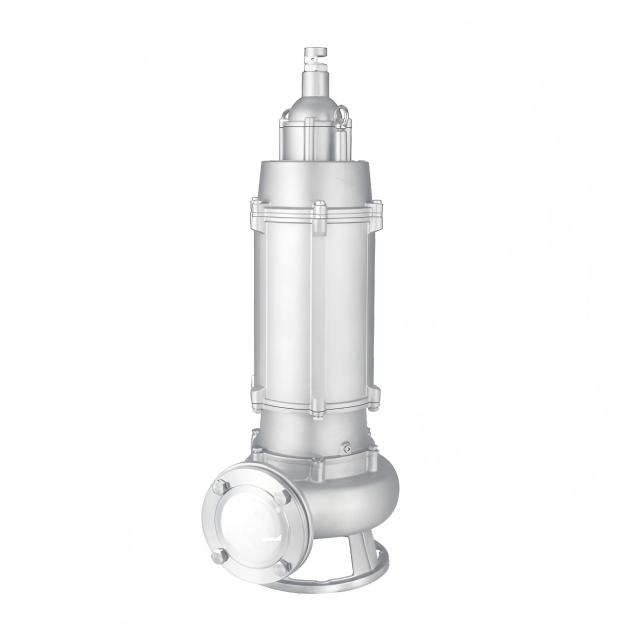
 

Flow:7-220m³/h

Head: 6-60m

Power:0.75-15kw


Product description

1.Adopting stainless steel precision casting shell, it has the characteristics of corrosion resistance, environmental protection,high lift, and large flow rate.

2. The oil chamber adopts a double-sided mechanical seal made of fluororubber, while the outer chamber adopts a single-sided fluororubber mechanical oil seal structure, effectively reducing the problem of sealing water ingress caused by friction between the skeleton oil seal and the shaft.

3. The motor adopts high-temperature wire, F-class insulation, and a thermal protection device, effectively extending the service life of the pump.

4、According to customer requirements, a mixing device can be equipped, which generates a strong mixing force with the rotation of the motor shaft, stirring the sediment in the sewage tank into suspended solids and then discharging them. It can also be equipped with a cutting device, which can remove debris such as long fibers, plastic, paper bags, and straw from the sewage.

5. The explosion-proof level is Ex db llB T4 Gb.


Light vertical multistage centrifugal pump
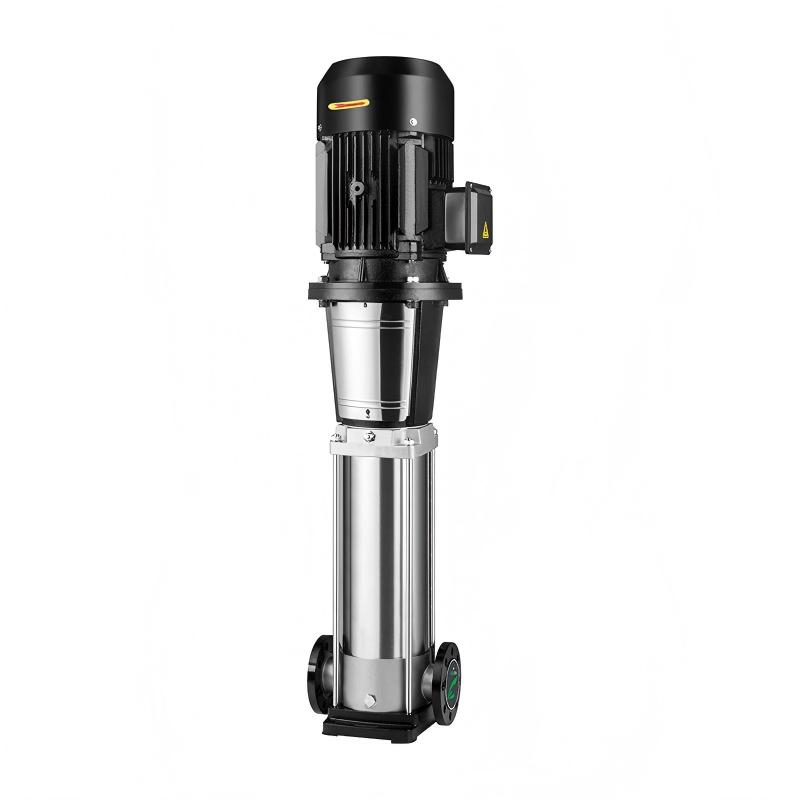
 

Flow: 2~240 m³/h

Head: 15~305 m

Power: 0.37~110 kW


Product Description:

CDL(F) is a multifunctional product, capable of transporting various media, from tap water to industrial liquids, suitable for different temperatures, flow rates, and pressure ranges. CDL (f) is suitable for mildly corrosive liquids.


Horizontal multistage stainless steel centrifugal pump
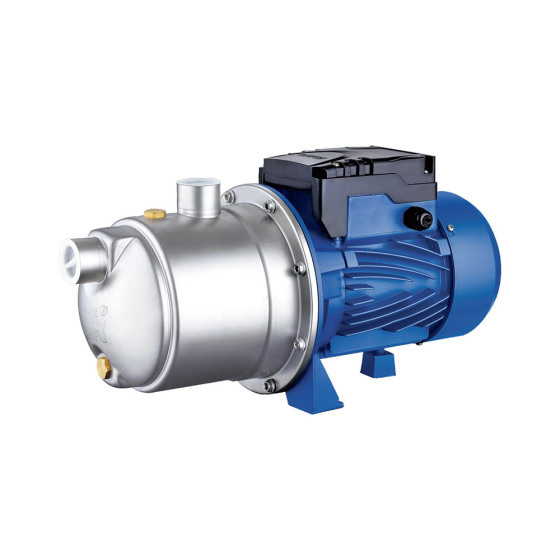
 

Flow: 0.5-26m³/h

Head: 7-52m

Power:0.37- 4.0kw


Characteristics:

horizontal multi-stage stainless steel centrifugal pumps are manufactured through advanced processes such as stamping and welding using stainless steel (SS304) plates. They have the characteritics of being lightweight, aestheticalh pleasing, material-saving, and highly efficient, Their performance reaches the advanced level of similar products.


Stainless steel self-priming corrosion-resistant miniature electric pump
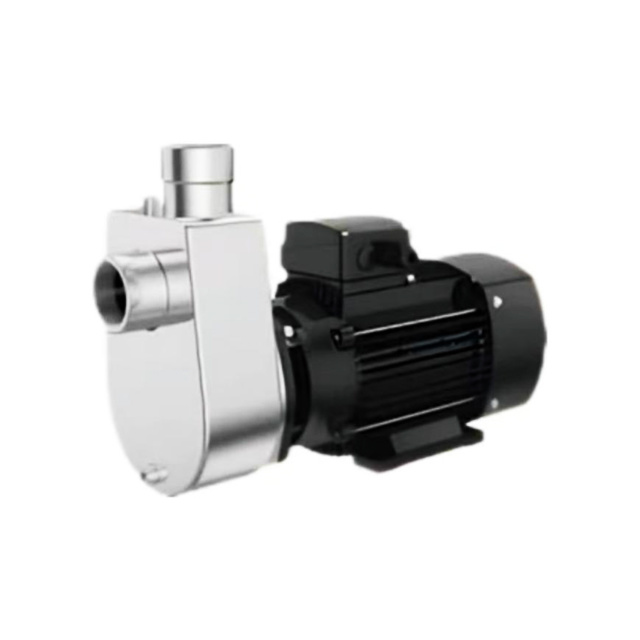
 

Flow: 3-15m³/h

Head: 8-22m

Power: 0.25-3kw


Characteristics:

1.Strong self-priming ability: There is no need to pour in priming water. It can automatically suck in the liquid after starting, which is convenient to use.

2.Good corrosion resistance: Made of stainless steel material, it can resist a variety of corrosive media and has a wide range of applications.

3.Compact size: With a compact structure, it takes up little space, making it easy to install and move.

4.Stable operation: With reliable performance, low noise and small vibration, it can work stably for a long time

5.Easy maintenance: With a simple structure and few components, it is easy to disassemble and repair.

Why Are Air Source Heat Pumps the Best Heating Solution for Modern Livestock Farming

Maintaining an optimal indoor temperature is essential for healthy animal growth and improving production efficiency in large-scale livestock farming. However, traditional heating methods—such as coal-fired boilers and electric heaters—often suffer from high energy consumption, heavy pollution, and unstable temperature output. These limitations make them unsuitable for the increasingly precise requirements of modern livestock environments.


With decades of HVAC expertise, H.Stars Group understands the industry’s demand for stable, efficient, and environmentally friendly heating. For this reason, H.Stars consistently recommends air source heat pumps as the ideal heating solution for livestock facilities. The recommendation is based on their strong alignment with real farm needs and proven equipment performance advantages.

Air source heat pump for livestock solution


1. Why Is Temperature Stability So Critical in Livestock Heating?

Animals are highly sensitive to temperature fluctuations.
• Piglets require a stable temperature of 20–25°C.
• Brooding chickens need temperatures around 30°C.
Even small deviations can increase disease risk and slow growth rates.
H.Stars air source heat pumps are equipped with advanced intelligent temperature control systems that monitor indoor conditions in real time. The system automatically adjusts heating output according to different growth stages, maintaining temperature variations within ±1°C. This ensures a consistently comfortable and healthy environment for livestock.

2. How Do Air Source Heat Pumps Support Green and Sustainable Farming?

As environmental regulations grow stricter, traditional coal-fired boilers face increasing restrictions due to emissions of sulfur dioxide, particulate matter, and other pollutants. These emissions not only harm the environment but may also pose health risks to animals.
Air source heat pumps operate without combustion, producing:
• No exhaust gases
• No smoke
• No ash or harmful by-products
They generate heat simply by transferring energy from the air—making them a truly clean and environmentally friendly heating solution. This helps livestock farms meet compliance standards, avoid penalties, and create a healthier indoor environment while supporting long-term sustainable farming development.

Energy-efficient livestock heating Farm heating system


3. Why Are Air Source Heat Pumps More Suitable for Remote or Large-Scale Farms?

Many livestock facilities are located in open outdoor areas or remote regions where access to traditional energy sources is limited. Air source heat pumps provide excellent adaptability because they:
• Require no coal, gas, or other fossil fuels
• Operate using only electricity and ambient air
• Fit perfectly in pig houses, poultry barns, aquaculture greenhouses, and more
Their compact design allows for flexible installation on rooftops, open land, or exterior areas—without needing a separate boiler room. This reduces construction costs and minimizes operational disruptions. Maintenance is also simple, lowering long-term operating expenses.

4. Can Air Source Heat Pumps Perform Well in Cold Northern Winters?

H.Stars has specially optimized the low-temperature heating performance of its air source heat pumps. Even in harsh winter conditions, the system delivers:
• Stable heat output
• Minimal performance loss in extreme cold
• Reliable heating that meets northern livestock farms' winter needs
Thanks to their modular design, farms can scale heating capacity according to facility size—from small family-run farms to large commercial operations.

Conclusion: A Future-Proof Heating Choice for Livestock Farming

Air source heat pumps offer unmatched advantages in energy efficiency, precise temperature control, environmental protection, and installation flexibility. Supported by H.Stars Group’s deep industry knowledge and robust technical capabilities, air source heat pumps help livestock farms:
• Reduce operating costs
• Maintain stable and healthy growth environments
• Achieve green and sustainable development
They are, without question, the most reliable and efficient heating solution for modern livestock farming.


How Can Ice Storage Chiller Systems Be Applied to a 1,000㎡ Cooling Project

As global energy efficiency demands rise, many buildings are seeking more sustainable and cost-effective cooling solutions. Among these, the ice storage chiller system stands out for its ability to “shift peak loads,” offering both economic and environmental advantages. But how can it be effectively applied to a 1,000㎡ cooling area?

Cost-saving Peak load shifting cooling Ice storage chiller


How Ice Storage Chillers Work

The operating principle of an ice storage system relies on the latent heat of ice. During nighttime, when electricity prices are lower, the system freezes water to store cooling energy. During daytime, when power demand and electricity rates peak, the ice melts to release cooling, meeting the building’s temperature requirements. This strategy not only reduces operational costs but also eases the load on the power grid during peak hours.

Step 1: Calculating Cooling Load Accurately

The foundation of an efficient design lies in accurate cooling load calculation. For a 1,000㎡ building, the cooling load varies depending on its function:
• Office buildings: approximately 100–120W/㎡
• Commercial spaces: approximately 150–200W/㎡
Taking an office example, a 1,000㎡ space requires about 100–120kW of cooling capacity. Factors such as building orientation, insulation, internal heat sources, and occupancy levels must also be considered to ensure precise system sizing.

Step 2: Selecting the Right Ice Storage System

Once the cooling load is known, choose an ice storage chiller with slightly higher capacity than the required cooling load (e.g., 100–120kW). The type of ice storage tank is also crucial:
• Ice coil tanks melt quickly and are ideal for short, high-demand periods.
• Ice ball tanks offer compact size and higher storage density.
The choice depends on the site’s available space and daily cooling patterns.

Step 3: Developing Smart Operating Strategies

Two main strategies are typically used:
• Full storage mode – All cooling is generated at night and stored for daytime use. Ideal for areas with high daytime electricity costs.
• Partial storage mode – Both the chiller and ice storage system work together during the day, offering more flexibility. Operators can adjust according to real-time electricity prices and cooling loads.

Step 4: Ensuring Proper Installation and Maintenance

Reliable performance also depends on professional installation and maintenance. Piping must be tightly connected, and electrical systems safely wired. Regular inspections should check pressure, temperature, and possible leaks in the storage tanks, as well as cleaning filters to maintain system efficiency.

Smart Cooling for Medium-Sized Buildings

For a 1,000㎡ building, a well-designed ice storage chiller system combines smart control, load management, and efficient operation. It not only delivers stable indoor comfort but also reduces long-term energy costs, achieving both economic and environmental benefits.