How to choose between different forged wheel finishes?

The finish you select for your forged wheels profoundly impacts not just their appearance, but also their maintenance requirements and long-term durability. Making an informed choice ensures your investment continues to enhance your vehicle's look and performance for years to come.


Exploring Popular Forged Wheel Finishes:

  • Machined Face Finish: This process highlights the wheel's natural aluminum beauty with precise, clean-cut lines. It offers a modern, technical look and is relatively easy to maintain, making it a popular choice for daily drivers and performance enthusiasts.

Black machined face wheel

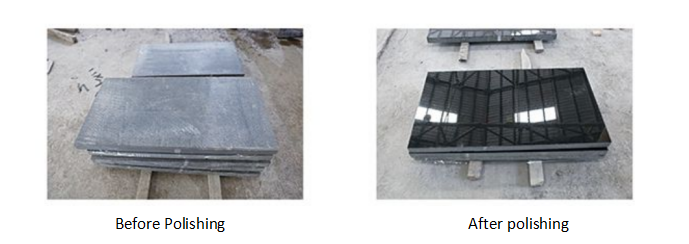
  • Polished Aluminum Finish: Achieved through intensive buffing, polished forged wheels deliver a stunning, mirror-like shine that’s synonymous with luxury and classic custom vehicles. However, to prevent oxidation and maintain their brilliant luster, they require dedicated, regular care.

Polished car wheel rim

  • Painted Finishes: From subtle satin blacks to vibrant custom hues, painted forged wheels offer virtually unlimited customization possibilities. A high-quality paint job provides excellent color consistency and, when combined with a clear coat, robust corrosion protection for a sleek, OEM-plus appearance.

Glossy black wheel

  • Brushed Finish: Achieved through a precise, directional abrasion technique, the brushed finishing process creates distinctive, linear satin textures on the forged aluminum surface. This results in brushed forged wheels that exhibit a sophisticated, understated metallic luster, emphasizing the material’s natural character while effectively concealing minor surface scratches and wear. With its combination of elegant visual depth and practical durability, the brushed finish offers an ideal balance between refined aesthetics and everyday resilience, making it a preferred choice for enthusiasts seeking a timeless, low-maintenance look.

Brushed red wheel

Choosing the Right Finish for You:
Your decision should balance aesthetics with practicality. Consider your local climate—coastal owners may prioritize maximum corrosion resistance, while those in snowy regions need a finish resilient against road salt. Also, honestly assess your willingness for wheel maintenance. While all finishes benefit from proper care, powder-coated and painted wheels are generally lower maintenance than polished options. Finally, consider resale value; neutral finishes typically appeal to a broader market, though a unique, well-executed custom finish can be a standout asset.

By understanding these key attributes, you can confidently select the perfect forged wheel finish that aligns with your style, lifestyle, and driving conditions.


Beyond the Equipment Itself Choosing Gachn Means Choosing Comprehensive Peace of Mind and Security

Investing in an automatic loading machine means buying far more than just steel and electrical circuits. Beyond core technologies and intelligent systems, we understand that enduring reliability, real results, and worry-free service are the ultimate criteria for your decision. Choosing Gachn will give you a complete value proposition that will give you complete peace of mind.


Looking back over the past three weeks, we have systematically analyzed the industry challenges of automatic cement loading and demonstrated how Gachn's "in-carriage" intelligent loading machine, with its revolutionary design and intelligent core, has overcome four core pain points: efficiency, vehicle type, dust, and maintenance. Today, let's look beyond the equipment itself and see what long-term value choosing us will bring you.


I. The Cornerstone of Reliability: Rooted in a Design Philosophy of "Easy Maintenance"

We firmly believe that excellent equipment must be durable and easy to maintain.

Disruptive Layout: Distributed Design

Many packing head solutions on the market concentrate complex mechanisms into one unit, resulting in "small maintenance space and difficult troubleshooting." Gachn innovatively adopts a "distributed layout," with each functional module independent and rationally arranged. This not only improves operational stability but also means that when maintenance is needed, engineers can quickly access the problem area, significantly shortening repair time and greatly reducing losses caused by downtime.

Quality Commitment: Globally Selected Core Components

The foundation of stability lies in every component. We insist on using top global brands to build a "golden supply chain" for our equipment:

Control System: Schneider PLC and HMI, ensuring accurate commands and reliable operation.

Pneumatic Components: SMC/FESTO cylinders and solenoid valves, guaranteeing the stability of power and control.

Electrical Components: Siemens/Schneider low-voltage electrical appliances, providing the safety foundation for the equipment.

Power Transmission: Siemens/Mitsubishi servo systems, ensuring precise and efficient movement.

This is not just a list of brands; it is our solemn commitment to the equipment's ultra-long service life and extremely low failure rate.


II. Marks of Success: Real Voices from Customer Sites

Practice is the sole criterion for testing truth. Our equipment has been operating stably in multiple cement plants, earning the trust of our clients.

Case Study 1: A Large Cement Group in Xinjiang

Challenge: Low loading efficiency, reliance on manual labor for high-sided trucks, and significant environmental pressure.

Solution: Introduced the Gachn "Box-Type" Intelligent Loading Machine.

Results: Achieved automated loading for all truck types, with a stable loading efficiency of 110 tons/hour. Dust production on-site was fundamentally controlled. Client feedback: "This truly solved our long-standing problem in the shipping process."

III. Reliable Support: Comprehensive Support from Installation to the Future

We understand that delivering equipment is only the beginning of our cooperation.

Professional Installation and Commissioning: We dispatch experienced engineering teams to provide on-site guidance for installation and commissioning, ensuring the equipment is put into production in optimal condition.

Comprehensive Technical Training: We provide comprehensive training for your operators and maintenance personnel, from theory to practical application, ensuring your team can operate the equipment independently and proficiently.

Solid After-Sales Commitment: One-year full machine warranty, providing timely spare parts support and remote technical guidance.

Free software system upgrades and technical support within three years.

A 24/7 response mechanism ensures your problems are addressed quickly at any time.


IV. Ultimate Integration: Your Value, Our Pursuit

Let's reiterate that Gachn provides you with a systematic, one-stop solution:

Breaking the mold with "in-carriage" technology, solving vehicle type and dust problems.

Achieving high efficiency and automation with "intelligent" technology at its core.

Ensuring long-term stable operation with "reliability" as the foundation.

Guaranteeing your return on investment with "full service".


A wise investment concerns production efficiency and operating costs for the next five to ten years. Choosing Gachn means choosing not only advanced equipment, but also a trustworthy long-term partner who can grow alongside your business.


It's time to make the most forward-thinking decision for your factory.

Request a personalized quote and planning solution tailored to your factory layout and vehicle type now!

Methods for Troubleshooting Progressive Screw Pumps


Regarding faults in screw pumps, we at Anhui Shengshi Datang have some effective solutions.

First, ensure that no foreign objects enter the pump body.

If solid debris enters the pump body, it can damage the rubber stator of the progressive screw pump. Therefore, it is crucial to prevent debris from entering the pump chamber. Some systems install a grinder before the pump, while others use a screen or filter to block debris from entering the pump. Screens should be cleaned promptly to prevent clogging.


Second, avoid operating the pump without material.

The progressive screw pump absolutely must not run dry. If dry running occurs, the rubber stator can instantly overheat due to dry friction and burn out. Therefore, having a properly functioning grinder and clear screens are essential conditions for the normal operation of the pump. For this reason, some pumps are equipped with a dry-run protection device. When material supply is interrupted, the self-priming capability of the pump creates a vacuum in the chamber, which triggers the vacuum device to stop the pump.


Third, maintain a constant outlet pressure.

The progressive screw pump is a positive displacement rotary pump. If the outlet is blocked, the pressure will gradually rise, potentially exceeding the predetermined value. This causes a sharp increase in the motor load, and the load on related transmission components may also exceed design limits. In severe cases, this can lead to motor burnout or broken transmission parts. To prevent pump damage, a bypass relief valve is usually installed at the outlet to stabilize the discharge pressure and ensure normal pump operation.

progressive screw pumps

Fourth, reasonable selection of pump speed.

The flow rate of the progressive screw pump has a linear relationship with its speed. Compared to low-speed pumps, high-speed pumps can increase flow and head, but power consumption increases significantly. High speed accelerates the wear between the rotor and stator, inevitably leading to premature pump failure. Furthermore, the stator and rotor of high-speed pumps are shorter and wear out more easily, thus shortening the pump's service life.


Using a gear reducer or variable speed drive to reduce the speed, keeping it within a reasonable range below 300 revolutions per minute, can extend the pump's service life several times compared to high-speed operation.


Of course, there are many other maintenance methods for progressive screw pumps, which requires us to be more attentive during daily use. Careful observation will contribute significantly to proper pump maintenance.


How should faults in progressive screw pumps be handled? This article will mainly introduce methods for troubleshooting progressive screw pumps.

1. Pump body vibrates violently or produces noise:

A. Causes:​ Pump not installed securely or installed too high; damage to the motor's ball bearings; bent pump shaft or misalignment (non-concentricity or non-parallelism) between the pump shaft and the motor shaft.

B. Solutions:​ Secure the pump properly or lower its installation height; replace the motor's ball bearings; straighten the bent pump shaft or correct the relative position between the pump and the motor.

2. Transmission shaft or motor bearings overheating:

A. Causes:​ Lack of lubricant or bearing failure.

B. Solutions:​ Add lubricant or replace the bearings.

3. Pump fails to deliver water:

Causes:​ Pump body and suction pipe not fully primed with water; dynamic water level below the pump strainer; cracked suction pipe, etc.


The sealing surface between the screw and the housing is a spatial curved surface. On this surface, there are non-sealing areas such as ab or de, which form many triangular notches (abc, def) with the screw grooves. These triangular notches form flow channels for the liquid, connecting the groove A of the driving screw to grooves B and C on the driven screw. Grooves B and C, in turn, spiral along their helices to the back side and connect with grooves D and E on the back, respectively. Because the sealing surface where grooves D and E connect with groove F (which belongs to another helix) also has triangular notches similar to a'b'c' on the front side, D, F, and E are also connected. Thus, grooves A-B-C-D-E-A form an "∞"-shaped sealed space (If single-start threads were used, the grooves would simply follow the screw axis and connect the suction and discharge ports, making sealing impossible). It's conceivable that many independent "∞"-shaped sealed spaces are formed along such a screw. The axial length occupied by each sealed space is exactly equal to the lead (t) of the screw. Therefore, to separate the suction and discharge ports, the length of the threaded section of the screw must be at least greater than one lead.


9 Essential Safety Points to Understand Before Using High-Temperature Magnetic Drive Pumps


High-temperature magnetic drive pumps are compact, aesthetically pleasing, small in size, and feature stable, user-friendly operation with low noise levels. They are widely used in chemical, pharmaceutical, petroleum, electroplating, food, film processing, scientific research institutions, defense industries, and other sectors for pumping acids, alkaline solutions, oils, rare and valuable liquids, toxic liquids, volatile liquids, and in circulating water equipment, as well as for supporting high-speed machinery. They are particularly suitable for liquids that are prone to leakage, evaporation, combustion, or explosion. It is best to choose an explosion-proof motor for such pumps.

Advantages of High-Temperature Magnetic Drive Pumps:

1. No need to install a foot valve or prime the pump.

2. The pump shaft is changed from dynamic sealing to enclosed static sealing, completely avoiding media leakage.

3. No independent lubrication or cooling water is required, reducing energy consumption.

4. Power transmission is changed from coupling drive to synchronous dragging, eliminating contact and friction. This results in low power consumption, high efficiency, and provides damping and vibration reduction, minimizing the impact of motor vibration on the pump and pump cavitation vibration on the motor.

5. In case of overload, the inner and outer magnetic rotors slip relative to each other, protecting the motor and pump.

6. If the driven component of the magnetic drive operates under overload conditions or the rotor jams, the driving and driven components of the magnetic drive will automatically slip, protecting the pump. Under these conditions, the permanent magnets in the magnetic drive will experience eddy current losses and magnetic losses due to the alternating magnetic field of the driving rotor, causing the temperature of the permanent magnets to rise and leading to the failure of the magnetic drive slip.


High-temperature magnetic drive pumps


Precautions for Using High-Temperature Magnetic Drive Pumps:

1. Prevent Particle Entry

(1) Do not allow ferromagnetic impurities or particles to enter the magnetic drive or the bearing friction pair.

(2) After transporting media prone to crystallization or sedimentation, flush promptly (fill the pump cavity with clean water after stopping the pump, run for 1 minute, then drain completely) to ensure the service life of the sliding bearings.

(3) When pumping media containing solid particles, install a filter at the pump inlet.


2. Prevent Demagnetization

(1) The magnetic torque must not be designed too small.

(2) Operate within the specified temperature conditions; strictly avoid exceeding the maximum allowable media temperature. A platinum resistance temperature sensor can be installed on the outer surface of the isolation sleeve to monitor the temperature rise in the gap area, enabling an alarm or shutdown if the temperature limit is exceeded.


3. Prevent Dry Running

(1) Strictly prohibit dry running (operating without liquid).

(2) Strictly avoid running the pump dry or allowing the media to be completely drained (cavitation).

(3) Do not operate the pump continuously for more than 2 minutes with the discharge valve closed, to prevent overheating and failure of the magnetic drive.


4. Not for Use in Pressurized Systems:

Due to the existence of certain clearances in the pump cavity and the use of "static bearings," this series of pumps must absolutely not be used in pressurized systems (neither positive pressure nor vacuum/negative pressure is acceptable).


5. Timely Cleaning:​

For media that are prone to sedimentation or crystallization, clean the pump promptly after use and drain any residual liquid from the pump.


6. Regular Inspection:​

After 1000 hours of normal operation, disassemble and inspect the wear of the bearings and the end face dynamic ring. Replace any worn-out vulnerable parts that are no longer suitable for use.

magnetic drive pumps


7. Inlet Filtration:​

If the pumped medium contains solid particles, install a strainer at the pump inlet. If it contains ferromagnetic particles, a magnetic filter is required.


8. Operating Environment:​

The ambient temperature during pump operation should be less than 40°C, and the motor temperature rise should not exceed 75°C.


9. Media and Temperature Limits:​

The pumped medium and its temperature must be within the allowable range of the pump materials. For engineering plastic pumps, the temperature should be <60°C; for metal pumps, <100°C. The suction pressure should not exceed 0.2MPa, the maximum working pressure is 1.6MPa, for liquids with a density not greater than 1600 kg/m³ and a viscosity not greater than 30 x 10⁻⁶ m²/s, and which do not contain hard particles or fibers.

High-temperature magnetic drive pumps replace dynamic seals with static seals, making the pump's wetted parts fully enclosed. This solves the unavoidable running, dripping, and leaking issues associated with the mechanical seals of other pumps. Manufactured using highly corrosion-resistant materials such as engineering plastics, alumina ceramics, and stainless steel, these pumps offer excellent corrosion resistance and ensure the pumped media remains uncontaminated.

Analysis and Troubleshooting of Seven Common Failures in Stainless Steel Submersible Pumps


Stainless steel submersible pumps are widely used in drainage applications across industries such as pharmaceuticals, environmental protection, food, chemical, and power due to their characteristics of corrosion resistance, hygiene, energy efficiency, environmental friendliness, non-clogging, high flow rate, and strong passage capability. Anhui Shengshi Datang will study together with everyone.

I. Common Causes and Solutions for Insufficient Flow or No Water Output in Stainless Steel Submersible Pumps:

1. The installation height of the pump is too high, resulting in insufficient impeller immersion depth and reduced water output. Control the allowable deviation of the installation elevation and avoid arbitrary adjustments.

2. The pump rotates in the reverse direction. Before trial operation, run the motor without load to ensure the rotation direction matches the pump. If this occurs during operation, check whether the power phase sequence has changed.

3. The outlet valve cannot open. Inspect the valve and perform regular maintenance.

4. The outlet pipeline is blocked, or the impeller is clogged. Clear blockages in the pipeline and impeller, and regularly remove debris from the reservoir.

5. The lower wear ring of the pump is severely worn or blocked by debris. Clean the debris or replace the wear ring.

6. The density or viscosity of the pumped liquid is too high. Identify the cause of the change in liquid properties and address it.

7. The impeller is detached or damaged. Reinforce or replace the impeller.

8. When multiple pumps share a common discharge pipeline, a check valve is not installed or the check valve is not sealing properly. Install or replace the check valve after inspection.

II. Causes of Abnormal Vibration and Instability During Operation of Stainless Steel Submersible Pumps:

1. The anchor bolts of the pump base are not tightened or have become loose. Tighten all anchor bolts evenly.

2. The outlet pipeline lacks independent support, causing pipeline vibration to affect the pump. Provide independent and stable support for the outlet pipeline, ensuring the pump’s outlet flange does not bear weight.

3. The impeller is unbalanced, damaged, or loosely installed. Repair or replace the impeller.

4. The upper or lower bearings of the pump are damaged. Replace the bearings.

III. Causes of Overcurrent, Motor Overload, or Overheating in Stainless Steel Submersible Pumps:

1. The operating voltage is too low or too high. Check the power supply voltage and adjust it.

2. There is friction between rotating and stationary parts inside the pump, or between the impeller and the seal ring. Identify the location of the friction and resolve the issue.

3. Low head and high flow cause a mismatch between the motor power and the pump characteristics. Adjust the valve to reduce the flow, ensuring the motor power matches the pump.

4. The pumped liquid has high density or viscosity. Investigate the cause of the change in liquid properties and adjust the pump’s operating conditions.

5. The bearings are damaged. Replace the bearings at both ends of the motor.

IV. Causes and Solutions for Low Insulation Resistance in Stainless Steel Submersible Pumps:

1. The cable ends were submerged during installation, or the power or signal cable was damaged, allowing water ingress. Replace the cable or signal wire, and dry the motor.

2. The mechanical seal is worn or not properly installed. Replace the upper and lower mechanical seals, and dry the motor.

3. The O-rings have aged and lost their function. Replace all sealing rings and dry the motor.

V. Causes and Solutions for Visible Water Leakage in Pipes or Flange Connections of Stainless Steel Submersible Pump Systems:

1. The pipeline itself has defects and was not pressure-tested.

2. The gasket connection at the flange joint was not properly handled.

3. The flange bolts were not tightened correctly. Repair or replace defective pipes, realign misaligned pipes, and ensure bolts are inserted and tightened freely. After installation, conduct a pressure and leakage test on the entire system. Replace components as necessary.

VI. Internal Leakage in Stainless Steel Submersible Pumps:

Leakage in the pump can lead to insulation failure, bearing damage, alarm activation, and forced shutdown. The main causes include failure of dynamic seals (mechanical seals) or static seals (cable inlet seals, O-rings), and damage to power or signal cables allowing water ingress. Alarms such as water immersion, leakage, or humidity may trigger shutdowns. Before installation, inspect the quality of all sealing components. Ensure proper contact between sealing surfaces during installation. Before operation, check the motor’s phase-to-phase and ground insulation resistance, and ensure all alarm sensors are functional. If leakage occurs during operation, replace all damaged seals and cables, and dry the motor. Do not reuse disassembled seals or cables.

VII. Reverse Rotation After Shutdown of Stainless Steel Submersible Pumps:

1. Reverse rotation occurs after the pump motor is powered off, mainly due to failure of the check valve or flap valve in the outlet pipeline.

2. Before installation, inspect the check valve for correct orientation and ensure the flap valve is centered and operates flexibly. Regularly inspect the check valve or flap valve during operation, and repair or replace damaged components with quality parts.


Performance Characteristics of Fluoroplastic Self-Priming Pumps


Fluoroplastic self-priming pumps, also known as the TIZF series fluoroplastic self-priming pumps, are designed and manufactured in accordance with international standards and the manufacturing processes for non-metallic pumps. The pump structure adopts a self-priming design. The pump casing consists of a metal shell lined with fluoroplastic, and all wetted parts are made of fluoroplastic alloy. Components like the pump cover and impeller are manufactured by integrally sintering and pressing metal inserts coated with fluoroplastic. The shaft seal utilizes an advanced external bellows mechanical seal. The stationary ring is made of 99.9% alumina ceramic (or silicon nitride), and the rotating ring is made of PTFE-filled material, ensuring highly stable corrosion resistance, wear resistance, and sealing performance.


A fluoroplastic self-priming pump does not require priming before startup (although the initial installation still requires priming). After a short period of operation, the pump can draw fluid up and commence normal operation through its own action.


Fluoroplastic self-priming pumps can be classified by their operating principle into the following categories:

1.Gas-liquid mixing type (including internal mixing and external mixing).

2.Water ring type.

3.Jet type (including liquid jet and gas jet).


Fluoroplastic self-priming pumps


Working process of the gas-liquid mixing self-priming pump: Due to the special structure of the pump casing, a certain amount of water remains in the pump after it stops. When the pump is started again, the rotation of the impeller fully mixes the air in the suction line with the water. This mixture is discharged into the gas-water separation chamber. The gas in the upper part of the separation chamber escapes, while the water in the lower part returns to the impeller to mix again with the remaining air in the suction line. This process continues until all gas in the pump and suction line is expelled, completing the self-priming process and allowing normal pumping.


Water ring self-priming pumps​ integrate a water ring and the pump impeller within a single housing, using the water ring to expel gas and achieve self-priming. Once the pump operates normally, the passage between the water ring and the impeller can be closed off via a valve, and the liquid within the water ring can be drained.


Jet self-priming pumps: consist of a centrifugal pump combined with a jet pump (or ejector). They rely on the ejector device to create a vacuum at the nozzle to achieve suction.


The self-priming height of a fluoroplastic self-priming pump is related to factors such as the front impeller seal clearance, pump speed, and liquid level height in the separation chamber. A smaller front impeller seal clearance results in a greater self-priming height, typically set between 0.3-0.5 mm. If the clearance increases, besides a decrease in self-priming height, the pump's head and efficiency also reduce. The self-priming height increases with the rise in the impeller's peripheral velocity (u2). However, once the maximum self-priming height is reached, further speed increases will not raise the height but only shorten the priming time. If the speed decreases, the self-priming height also decreases. Under other constant conditions, the self-priming height increases with a higher stored water level (but should not exceed the optimal water level for the separation chamber).


To better facilitate gas-liquid mixing within the self-priming pump, the impeller should have fewer blades, increasing the pitch of the blade grid. It is also advisable to use a semi-open impeller (or an impeller with wider flow channels), as this allows the returning water to penetrate more deeply into the impeller blade grid.

Most fluoroplastic self-priming pumps are matched with internal combustion engines and mounted on movable carts, making them suitable for field operations.


What is the working principle of a fluoroplastic self-priming pump?

For a standard centrifugal pump, if the suction liquid level is below the impeller, it must be primed with water before startup, which is inconvenient. To retain water in the pump, a foot valve is required at the inlet of the suction pipe, but this valve causes significant hydraulic losses during operation.

A self-priming pump, as described above, does not require priming before startup (except for the initial installation). After a short operation, it can draw fluid up and begin normal operation. The classification and working principles of the different self-priming types (gas-liquid mixing, water ring, jet) are as previously detailed.

Choosing the Right Circulation Pump Efficiency, Comfort, and Durability with Shinhoo


For engineers, system integrators, and OEMs in the HVAC, heat pump, and boiler sectors, choosing the right circulation pump is critical for system efficiency, reliability, and comfort. Shinhoo Basic 50-12SF Ultra pumps are designed specifically for heating and hot water circulation systems, providing optimal performance for modern residential and commercial installations.


Optimized Performance for Every Condition

Shinhoo pumps are engineered with hydraulic and motor optimization, achieving up to 40% overall efficiency. This means your system operates cost-effectively without compromising performance. With 1000W power and a noise index of ≤43dB(A), these pumps deliver whisper-quiet operation, ensuring comfort in any living or working environment.

Adaptable Operation: One Pump, Multiple Modes

Modern systems require flexibility. Shinhoo circulation pumps are designed with three-speed modes (Ⅰ, Ⅱ, Ⅲ):

lContinuous Comfort – Keep your system stable with uninterrupted operation.

lMulti-Condition Adaptation – One pump adapts to seasonal changes, time schedules, and different operational modes without the need for replacement.

lEasy Commissioning – Select the ideal flow and pressure simply by choosing the right mode.

lBackup Mode Protection – If the high-speed mode fails, the mid-speed mode keeps your system running, avoiding complete downtime.

With these features, your system remains stable, efficient, and reliable, season after season.


Durability You Can Trust

Shinhoo pumps are built to last. Every unit undergoes 2000+ hours of durability testing and is designed for a 10-year lifespan, giving you peace of mind and long-term reliability.

Why Shinhoo Pumps Stand Out

  • Quiet Operation – ≤43dB(A) for near-silent performance
  • Flexible Speed Control – Adapts to different system requirements
  • High Efficiency – Reduces energy costs and improves system performance
  • Long Lifespan – Tested for 2000+ hours, designed for 10 years

Whether you’re upgrading an existing system or installing a new one, Shinhoo Basic 50-12SF Ultra pumps deliver the perfect combination of efficiency, adaptability, and durability.


Mega S Pro Series Reliable, Efficient, and Intelligent Circulation Pumps for Modern HVAC Systems

In today’s fast-evolving HVAC and water supply market, efficiency, reliability, and smart control are more important than ever. Shinhoo’s Mega S Pro Series circulation pumps are designed to meet these demands, offering advanced technology, long-lasting durability, and versatile applications for both residential and commercial systems.


Advanced Control and Protection Functions

Mega S Pro Series offers 12 control modes and 15 protection functions, giving operators maximum flexibility and safety. Users can choose from Temperature Control, ΔT Control, 0–10V, 4–20mA, PWM, and Communication Control modes depending on their system requirements. These intelligent features ensure optimal performance while protecting the pump and connected systems from potential damage.


Quiet Operation and Long-Term Reliability

Noise can be a critical factor in residential and commercial environments. Mega S Pro Series operates at an ultra-low Noise Index ≤45 dB(A), with Mega S 25-12 Pro model reaching ≤39 dB(A). Coupled with a specially coated shaft and robust engineering, these pumps provide reliable performance for over 10 years, making them a long-term investment in system efficiency and user comfort.


Versatile Applications

  • Shinhoo Mega S Pro pumps are suitable for a wide range of applications:
  • Heating & Cooling Systems: Perfect for both hot water and cold water circulation.
  • Air-Conditioning Systems: Ensures consistent flow for residential and commercial setups.
  • Residential & Commercial Water Supply: Reliable pressure and flow for everyday use.
  • R290 (Propane) Refrigerant Systems: Compatible with eco-friendly refrigerants for sustainable solutions.

Whether used in new installations or system upgrades, these pumps are engineered to deliver optimal performance while minimizing energy consumption and operational noise.


User-Friendly Interface

TFT LCD Display allows intuitive setup and monitoring, making installation and maintenance straightforward. Users can quickly access real-time data, adjust control modes, and ensure the pump operates at peak efficiency without requiring extensive technical expertise.

Shinhoo Mega S Pro Series is more than just a circulation pump — it’s a smart, quiet, and durable solution built for modern HVAC and water systems. By combining advanced control features, ultra-quiet operation, and robust engineering, these pumps help optimize system efficiency, reduce maintenance costs, and enhance user comfort.

Shinhoo continues to innovate, providing reliable, energy-efficient, and intelligent solutions for the next generation of heating, cooling, and water supply systems.

Reliable Thermal Management with Shinhoo Horizontal Multistage Wet Rotor Pumps

In today’s fast-evolving energy landscape, maintaining stable and efficient thermal management is critical — whether for residential buildings, commercial projects, or large-scale centralized energy storage systems. Shinhoo Horizontal Multistage Wet Rotor Pumps are engineered to meet these demands, ensuring reliable performance across diverse applications.


Compact Design, Powerful Performance

Despite their small footprint, Shinhoo pumps deliver exceptional efficiency and stability. Shinhoo horizontal multistage wet rotor design allows for high flow rates and consistent pressure, making them ideal for a wide range of heating, cooling, and energy storage systems.


Versatile Applications

Residential & Commercial HVAC: Keep hot water circulation and heating/cooling systems running smoothly.

Data Center Cooling: Manage critical thermal loads to ensure uninterrupted operation of servers and equipment.

Energy Storage Modules: Support stable thermal conditions in batteries and other energy storage solutions, improving lifespan and performance.


Sustainable and Reliable

At Shinhoo, we prioritize not just performance but also sustainability. Our pumps provide stable, efficient energy flow while minimizing energy consumption, helping clients achieve greener operations without compromising reliability.


Why Choose Shinhoo

  • Compact, space-saving design
  • High efficiency and stable operation
  • Wide compatibility across residential, commercial, and industrial applications
  • Supports sustainable energy management initiatives

Whether it’s for everyday comfort, industrial efficiency, or large-scale energy solutions, Shinhoo pumps deliver small size, strong performance, and sustainable energy flow.


Shinhoo EPS25-40NC Efficient and Reliable Horizontal Multistage Wet Rotor Pump

Shinhoo EPS25-40NC is a horizontal multistage wet rotor pump engineered for high efficiency, quiet operation, and long-term reliability. Designed for modern HVAC, energy storage, and industrial systems, it delivers consistent performance across a wide range of applications, from residential hot water circulation to complex industrial cooling and data center systems.


Efficient & Steady Operation — Optimized 3D impeller and 304 stainless steel hydraulics ensure high efficiency and a maximum head of 40 meters, providing stable flow for diverse applications.

Wet Rotor Design — Maintenance-free and leak-proof, eliminating common issues associated with mechanical seals.

Quiet Operation — Water-cooled design reduces noise by 25%, creating a peaceful environment for residential and commercial settings.

Compact Design — 20% smaller footprint allows for easier installation, even in tight spaces.

Durable & Corrosion-Resistant — IP56 protection ensures long-term reliability in harsh environments.

Wide Temperature Range — Operates in ambient temperatures from -40°C to 70°C and medium temperatures from -40°C to 95°C, supporting 55% ethylene glycol solutions.

Flexible Installation — Supports chuck and threaded interfaces for seamless integration into various systems.

Multistage Circulation Pump

Shinhoo EPS25-40NC is built to handle a variety of circulation and cooling requirements:

  1. Charging station cooling systems
  2. Energy storage systems
  3. Domestic water supply systems
  4. Hot water circulation and HVAC systems
  5. Industrial circulation systems
  6. Cleaning and garden irrigation systems
  7. Data center cooling systems

Whether you are maintaining residential comfort, managing industrial operations, or ensuring critical system stability in data centers, EPS25-40NC provides reliable, quiet, and efficient performance.


With over 2000 hours of rigorous testing and a 10-year design lifespan, EPS25-40NC offers long-term durability and operational peace of mind. Its combination of advanced hydraulics, quiet operation, and flexible installation makes it an ideal choice for professionals looking to enhance system efficiency while minimizing maintenance and operational costs.


Upgrade your system with Shinhoo EPS 25-40 NC and experience consistent, high-performance circulation for every application.